
TEENS & PARENTS · AUSTIN, TX

A changing body.
Goals that matter to you.

A growth spurt, a busy sports season, or discomfort after practice can raise questions for teens and parents. Start with what you feel and what you want to do. Clients ages 13–16 receive FST only. From age 17, massage is also available. Chris shapes the visit around your comfort, activity, and medical history.

Choose your first visit ↗
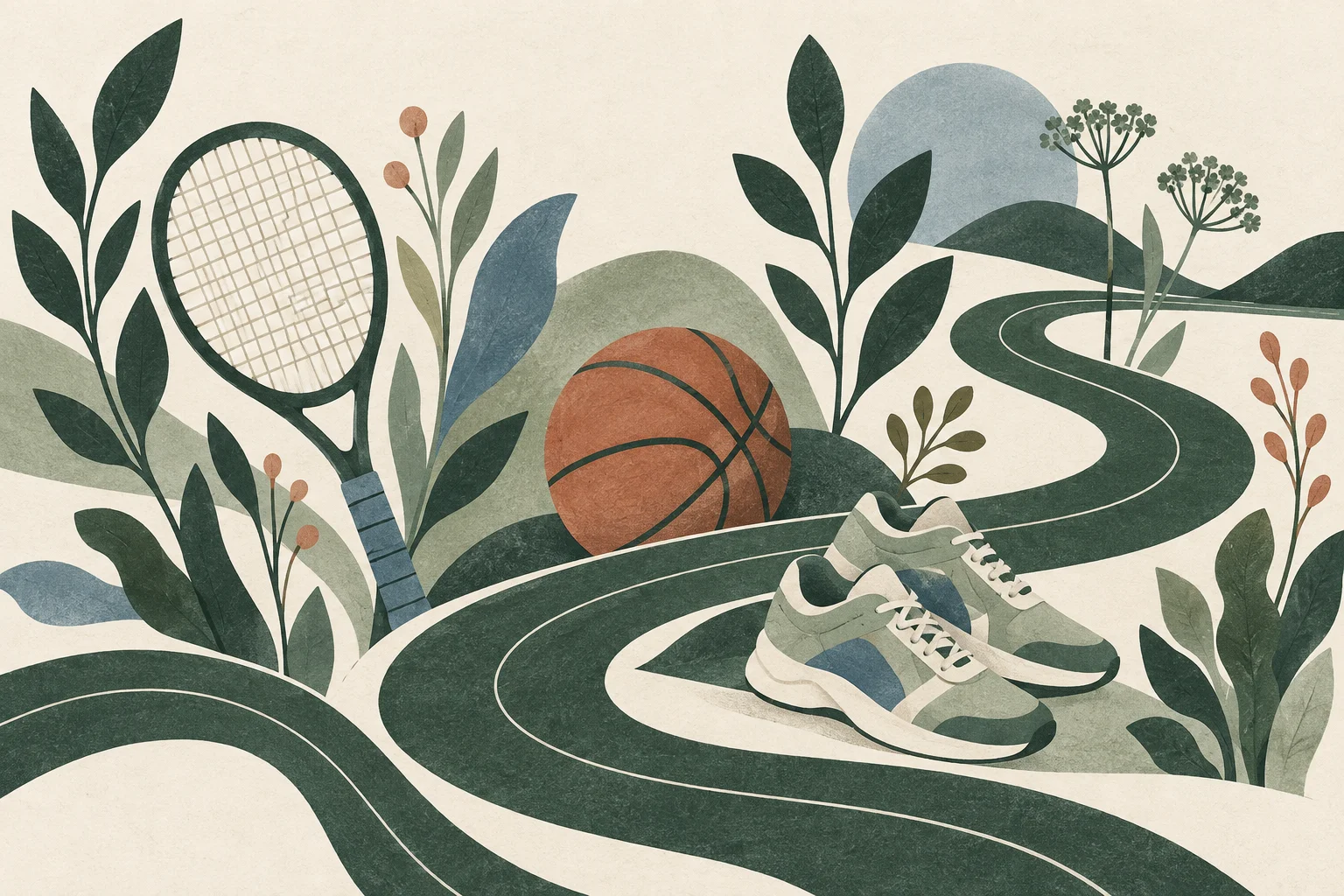
Paper collage of a winding track, tennis racket, basketball, trainers, and plants.
Your own pace. Your own movement goals.

01 / GROWTH & PUBERTY

Your body changes. Your movement can change, too.

A busy week of school, practice, and other activities can change how your body feels. Your own goals and feedback guide the visit.

A full week asks a lot

School teams, club sessions, gym work, and competitions all add to the demands on your body. Repeating the same activity without enough recovery can lead to overuse injuries. Tell Chris about the whole week, including rest days.
Your goal deserves a voice

You may want to enjoy practice, prepare for team trials, or feel more at ease in everyday movement. Chris starts with your own goal. Parents can add useful context without speaking for you.

Read more: AAP: puberty and sports performance · AAP: overuse injuries in young athletes

02 / ATHLETIC GOALS & FST

Start with a movement that matters to you.

A comfortable reach, turn, or warm-up movement can give the visit a focus. Chris supports and guides you through Fascia Stretch Therapy (FST), with the range and pace adjusted to you.

You do not need to be a competitive athlete to come in. Care can focus on comfort during everyday movement.

01 / Choose a starting movement

Tell Chris what feels limited. Choose a small, comfortable movement that fits any restrictions from your medical team.

02 / Try supported movement

Chris supports and guides the part of your body being moved while you give feedback. He adjusts the position and range to your comfort. You do not have to reach an adult’s range or push through pain.

03 / Review your movement with Chris

Try the same movement again and describe what feels different. This helps you and Chris choose the next step. Your medical team guides return to sport after injury.

03 / ADDITIONAL OPTIONS · AGES 17+

More options from age 17.

From age 17, massage and supporting methods may be part of your care. For ages 13–16, Chris provides FST only. He explains each option before starting, and you decide together.

Supporting methods are included when selected for FLEX. Optional first-visit tape is $20. Chris explains any charge for another appointment type before you agree to it.

If you are already very flexible, more range may not be a useful goal. Chris can use a smaller movement or omit stretching. New pain, tingling, or a change in symptoms is a reason to stop and reassess.

Traditional Massage

When suitable, Chris can use massage around areas of muscle discomfort and adjust the pressure from your feedback. A painful joint or suspected bone injury needs assessment before local hands-on work.

About Traditional Massage ↗

Dermal-Fascial Restoration®

For a local pulling sensation, Chris can discuss gentle skin contact and check how the same movement feels afterward.

About DFR® ↗

Kinesiology Tape

Optional kinesiology tape may provide a skin-contact cue during movement. It is not protection for a growth plate injury or clearance to play. Kinesiology tape will not be applied over damaged or irritated skin. Tell Chris about adhesive reactions.

About Kinesiology Tape ↗

04 / WHAT HAPPENS IN A VISIT

A conversation. A clear plan. Your feedback.

There is time for your questions. Chris explains the care, listens to your feedback, and makes the plan with you. You can ask for a change, pause, or stop at any point.

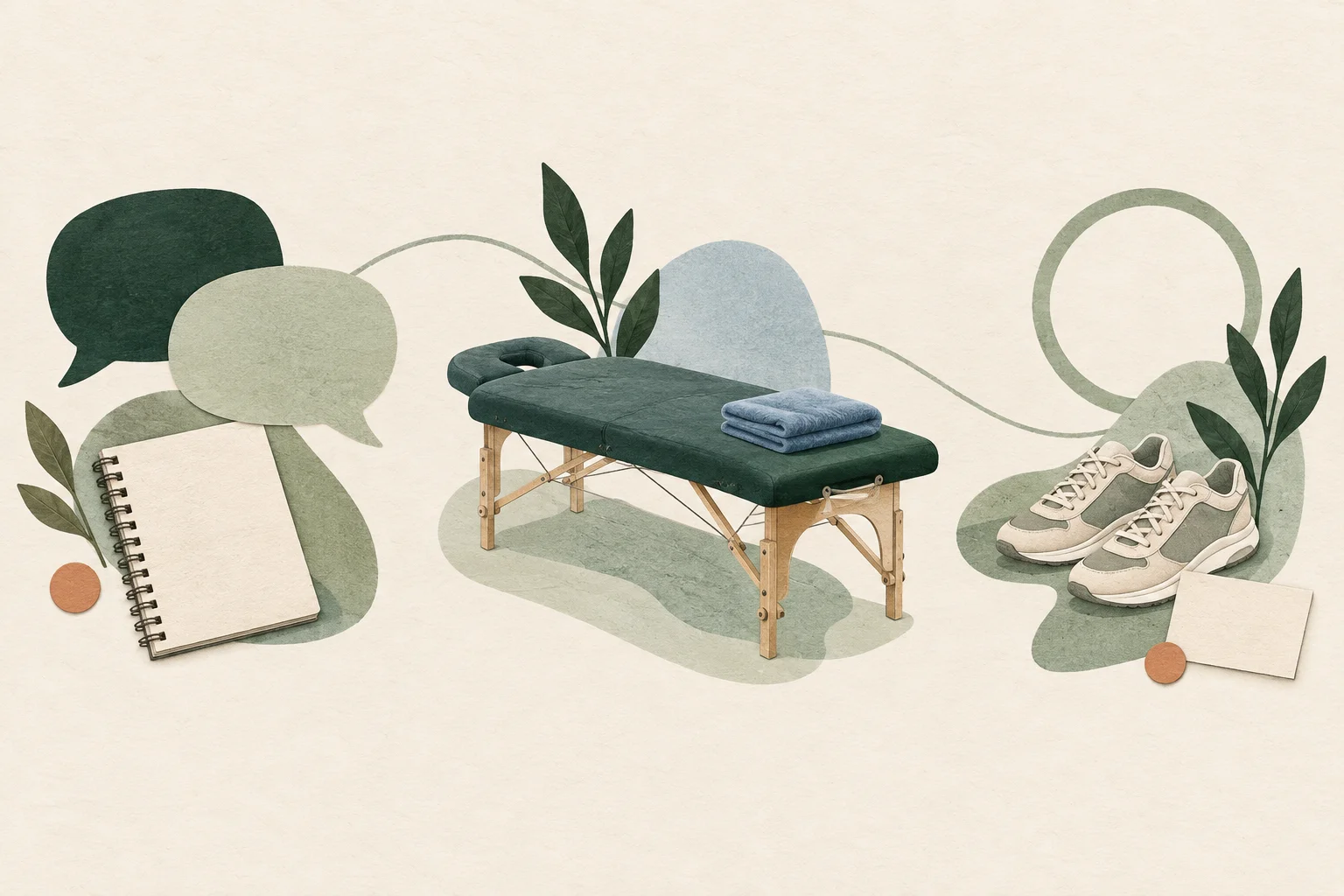
Illustrated speech bubbles and notebook, an empty treatment table, and trainers connected by a curved line.
Talk about your goals, agree on suitable care, then review your movement with Chris. View full-size illustration ↗

Talk about your week

Chris asks about your symptoms, recent growth, sport and school schedule, previous injuries, and what you want from the visit. Share medical advice, rehabilitation exercises, and any limits on activity.

Agree on suitable care

Chris explains the proposed positions and contact, then checks that you are comfortable with the plan. If your symptoms need medical assessment first, hands-on care may be deferred.

Try, review, and plan

During suitable treatment, tell Chris how it feels. Review the selected movement together, then discuss the next step and any questions for your clinician or coach. Your medical team makes return-to-play decisions.

05 / MEDICAL ASSESSMENT

Get the right help before hands-on care.

Pain during sport, persistent pain, or a limp needs medical advice. Your medical team can check the cause and guide recovery before hands-on care.

Arrange a medical assessment

Contact your pediatrician or sports medicine clinician for pain that keeps returning, affects activity or sleep, or stays in one joint or one limb. After an injury, bring any diagnosis and activity limits to Chris. Your medical team guides rehabilitation and return to sport.

Know when to get urgent medical advice.

After an injury, seek prompt care for marked swelling, severe pain, or difficulty bearing weight or using a limb. Stop sport and get assessed after a possible concussion. Do not use a bodywork visit to test whether an injury is safe to play through.

If you need emergency help.

If you are experiencing seizures, repeated vomiting, increasing confusion, or difficulty staying awake after a head injury, you need emergency care. Call 911 or go to the emergency department.

Read more: NHS: growing pains and when to seek advice · AAOS: signs of a growth plate injury · CDC: concussion signs and danger signs

YOUR NEXT STEP

Start with what
matters to you.

You do not need to select a technique before booking. The first visit gives you and Chris time to discuss your goals and begin suitable care.

What should we bring and wear?

Wear comfortable clothes that allow movement. Bring details of recent injuries, relevant medical advice, current activity limits, and questions you want to discuss. The first-visit page has studio location and arrival details.

What ages does Chris see, and must a parent stay?

Chris does not provide treatment for children younger than 13. Clients ages 13–16 receive FST only. Massage is available from age 17. For ages 13–15, a parent must remain in the treatment room during treatment. A parent does not need to attend for ages 16–17.

Can we book while recovering from a sports injury?

Contact Chris with the diagnosis and your clinician’s restrictions before booking. Suitable bodywork may fit alongside a recovery plan. New or unexplained injury pain needs medical assessment first.

What does the research show?

The medical sources on this page explain growth, injuries, and when to seek care. They are not trials showing that FST, massage, DFR®, or kinesiology tape treats adolescent growth plate injuries or improves sporting performance. Treatment choices are individual and should fit any medical plan.

FIRST-VISIT PRICES

New clients: choose “FIRST TIME CLIENT” in MassageBook.

First visits must be paid in full in advance.

Choose the amount of time that feels right for you. Both visits include a conversation, movement review, and hands-on care. The 90-minute option gives you another 30 minutes together.

The first 15–20 minutes are for your history, goals, and movement review. Hands-on care follows within your appointment time.

Your time is one-to-one with Chris in his private studio. The support, pace, and pressure follow your needs.

Optional kinesiology taping adds $20 to a first visit. DFR® is not usually needed at the first visit.

Returning client? Book your next session

OPTIONAL READING

Understand the background.

Know what may need a closer look.

OPTIONAL READING

Know what may need a closer look.

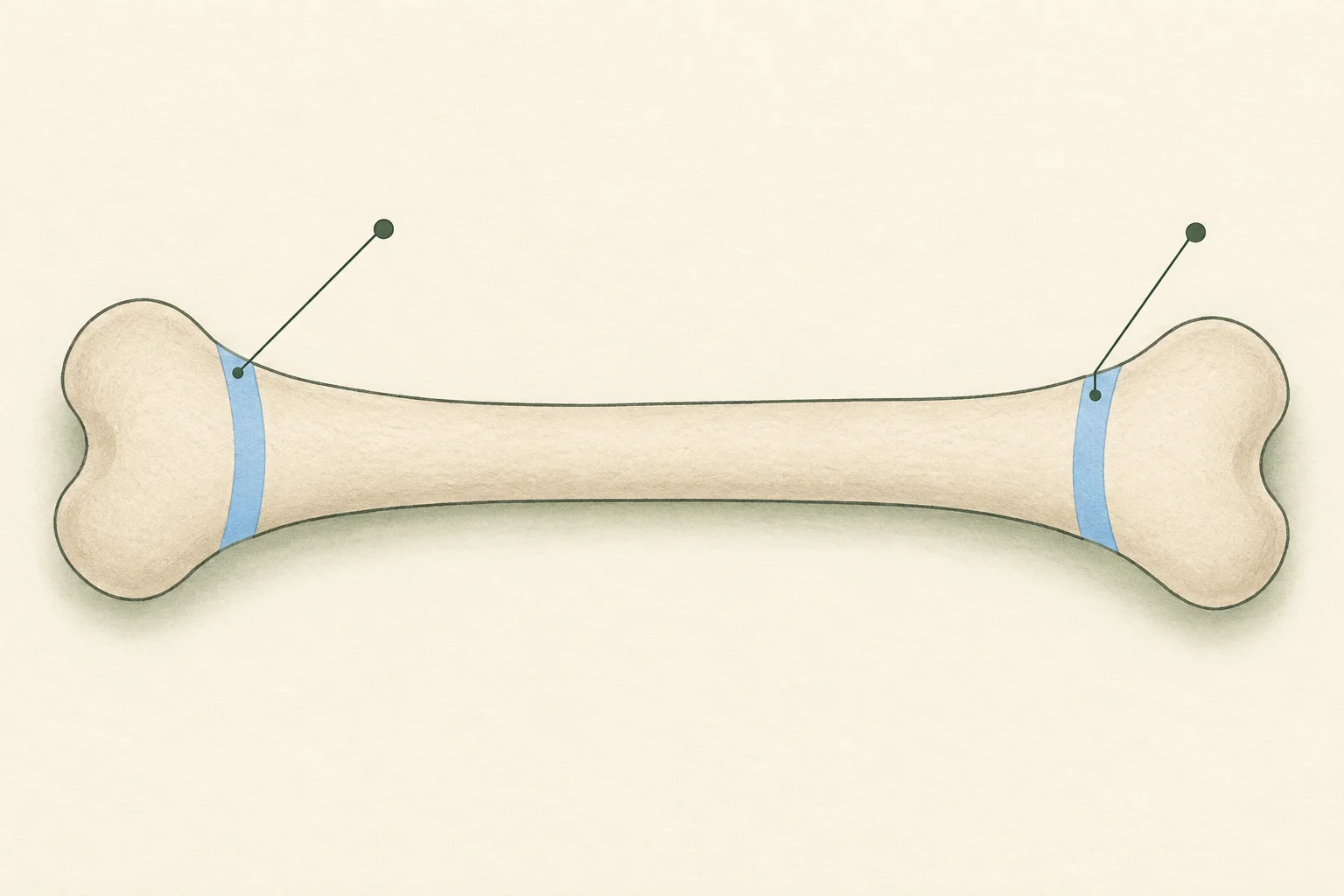
Growth plates are areas of cartilage near the ends of growing bones. They help bones develop and are more vulnerable to injury than mature bone. Pain near a joint after a fall or repeated activity needs attention, even if it feels like a minor strain.

Growth areas where tendons attach can also become irritated. These examples explain why pain needs assessment; they cannot tell you which condition you have. Chris does not diagnose or treat growth plate injuries.

Simplified long bone with a blue band near each end marking the growth plates.
The blue bands mark growth plates near the ends of a growing bone. These areas are cartilage; the bands do not show an injury. View full-size illustration ↗

Knee pain with running or jumping

Osgood–Schlatter disease involves irritation at the growing attachment area where the kneecap tendon meets the shinbone. It can cause pain and tenderness at the bump below the knee. A clinician should assess this pattern before you try to stretch through it.

Heel pain during sport

Sever’s disease is irritation of the growing area at the back of the heel, where the Achilles tendon attaches. Running and jumping can bring on pain. Heel pain or a limp needs assessment and a plan for activity.

A sudden injury or pain that builds

A fall, twist, or collision can injure growing bone. Repeated throwing, running, or jumping can also cause problems over time. New swelling, pain in one specific spot, or pain that keeps returning should not be dismissed as normal growth.

Read more: AAOS: growth plate fractures · AAOS: Osgood–Schlatter disease · AAOS: Sever’s disease

Reviewed by Chris Corona · Review confirmed