Start with what matters to you
Tell Chris what you would like to do more comfortably, whether that is reaching overhead, walking, or returning to a favourite activity.
 RECOVERYChoose your first visit
 KINESIOLOGY TAPE · AUSTIN, TX
A gentle reminder during a reach, a walk, or your usual activity. Kinesiology tape is an optional addition to hands-on care, selected with Chris around your comfort and movement.
Choose your first visitFirst visit · 60 minutes $165 / 90 minutes $235
With Chris Corona · Optional support for your session
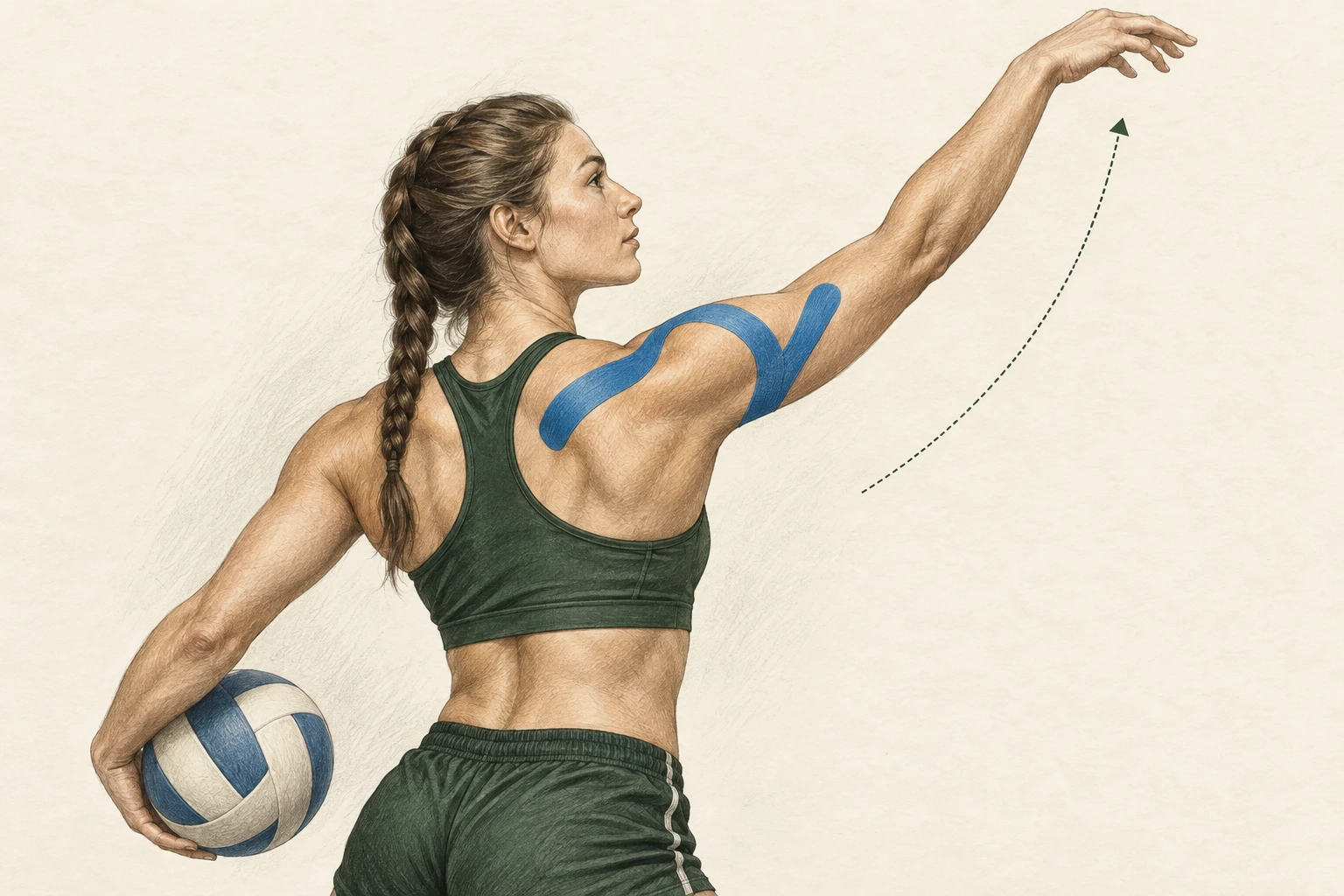
01 / GENTLE CONTACT · EVERYDAY MOVEMENT
Kinesiology tape is a flexible adhesive strip that moves with your skin. Chris may add it to your FST, massage, or other hands-on session to support a comfortable reach, step, or activity.
You may know it as KT tape or kinesiology tape. Here, taping is part of your wider session with Chris, rather than a treatment offered on its own.
Tell Chris what you would like to do more comfortably, whether that is reaching overhead, walking, or returning to a favourite activity.
Chris explains how taping might fit your care and checks your skin and any adhesive sensitivity. You can ask questions or choose to leave it out.
Try a familiar movement with Chris before and after taping. Your feedback helps him adjust the care to how you feel.
02 / COMFORT · AWARENESS · MOVEMENT
Taping may offer temporary relief or a helpful movement cue. Chris uses it with other methods to support the activities that matter to you.
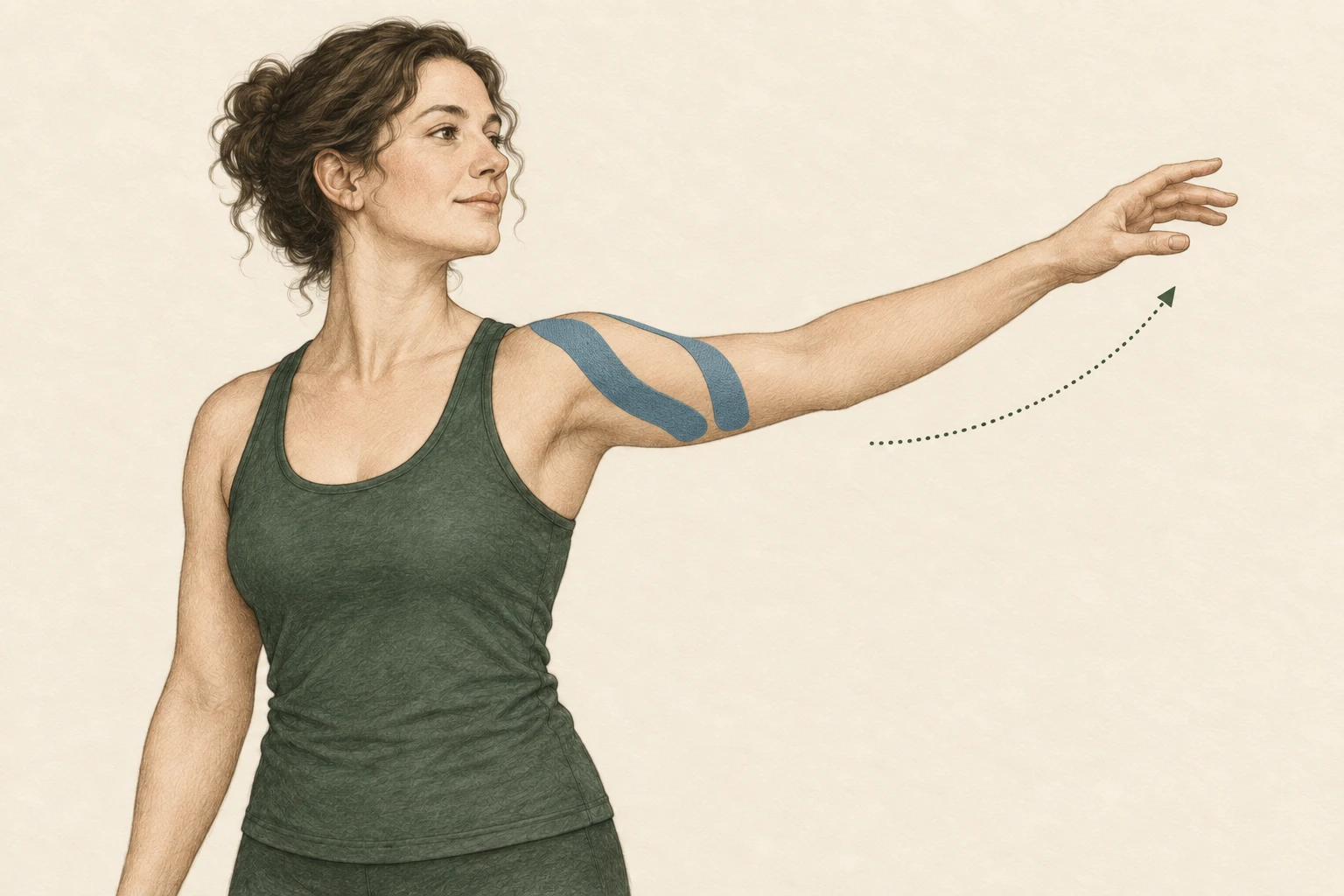
Contact with the tape may help you become more aware of where an arm or leg is as you reach, turn, or step.
Some people find that a familiar task feels more comfortable with tape. Chris explores that response with you.
Unlike hands-on contact during a session, tape stays on your skin while you go about daily activities, for the wear time agreed with Chris.
Research suggests that kinesiology taping may help with short-term comfort and some aspects of movement awareness. Studies vary in their taping methods, the people treated, and the quality of their design, so they give an incomplete picture of who benefits most and how long benefits last.
Mo et al., 2026 · evidence overview ↗ Ager et al., 2023 · shoulder position sense ↗
03 / AFTER CARE · DURING EVERYDAY MOVEMENT
Chris offers taping alongside other methods, not as a stand-alone treatment. He can explain how each part of your session relates to your goals and help you decide whether to include it.
For example, you might explore a comfortable reach during your hands-on session, then try it with tape. Let Chris know how it feels during daily activity and after removal so your next session can reflect your experience.
Tape is included when selected for FLEX. It adds $20 to a first visit. Chris confirms the charge for other appointment types before application.
FST explores comfortable, supported movement. Taping may then offer a gentle skin cue as you use that movement in everyday activity.
Explore FST ↗Massage provides hands-on contact and pressure tailored to your comfort. Taping can add a movement cue after the session, once the skin is prepared.
Explore massage ↗DFR uses focused skin-tension work during your session. Chris may also suggest taping when continued skin contact could be useful during movement.
Explore DFR ↗Flex combines massage and FST. Chris can discuss adding kinesiology tape when it fits your goals and feels comfortable on your skin.
Explore Flex ↗04 / COMFORT INCLUDES YOUR SKIN
Let Chris know about sensitive skin, adhesive reactions, recent surgery, or changes in sensation. He checks the area before application and avoids damaged or irritated skin.
If you are returning to sport after an injury, follow your treating clinician’s plan. Feeling more comfortable is useful feedback, alongside the strength, movement, and recovery checks needed for your activity.
If you notice itching, burning, redness, or discomfort, gently remove the tape and contact Chris for advice.
Chris explains how long to wear the tape and how to remove it. Peel slowly while supporting the skin, rather than pulling it off quickly.
Tell Chris about any prescribed brace, compression, or rehabilitation plan. New unexplained swelling, a recent injury, or worsening numbness or weakness may need medical assessment before taping.
05 / THE TOOL & YOUR CARE
Chris chooses the placement and use of tape around your movement, comfort, and the hands-on care you receive.
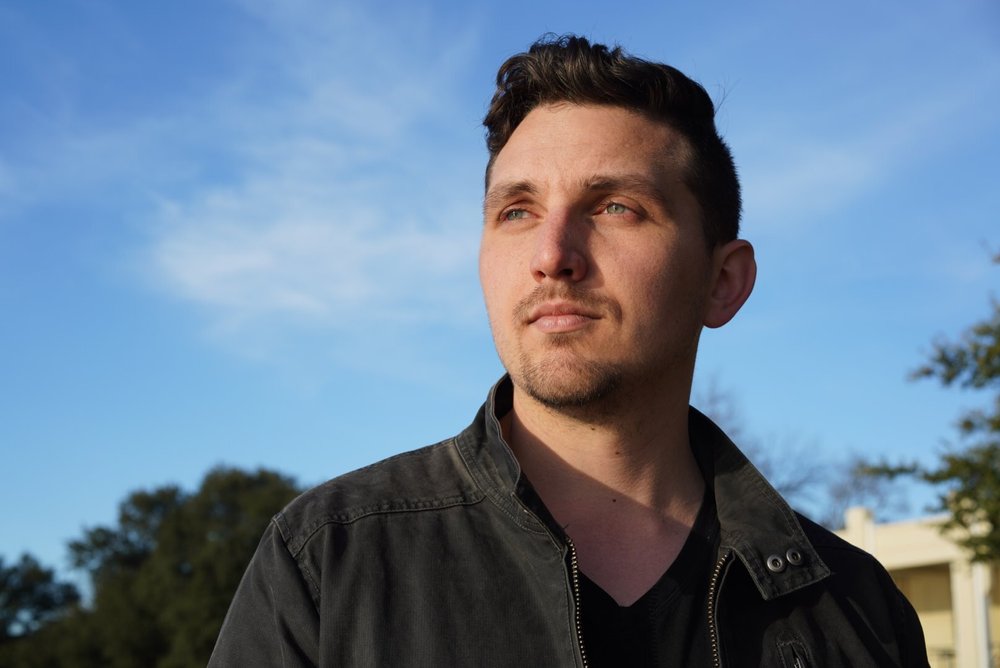
CHRISTOPHER CORONA
Chris Corona brings his background in massage, biomechanics, and Fascia Stretch Therapy to your session. He listens to what feels difficult and works with you on a comfortable way forward.
Chris has completed KT Tape Course 1: Intro to Kinesiology Tape and Course 2: Targeted Taping Techniques. He uses that training alongside his massage and FST background when selecting tape for a visit.
You do not need to choose a method or tape pattern before your visit. Chris will explain the options and any added cost so you can decide together.
Kinesiology tape stretches with your skin, allowing you to keep moving while you feel its contact.
Elastic tape, rigid sports tape, and braces serve different purposes. Chris considers your needs and any guidance from your treating clinician.
Tell Chris how the tape feels during the session and in daily activity. That helps you both decide whether it is a useful part of your care.
YOUR NEXT STEP
Book your first visit with Chris. Bring your goals and questions. Chris will explain the options and begin care at a pace that feels right for you.
Tape is an optional part of hands-on care. Choose a first visit and tell Chris what you would like help with. Tape is included when selected for FLEX and adds $20 to a first visit.
FST gives you time to explore supported movement with Chris. Tape may provide a gentle reminder during movement afterward. Chris checks how the combination feels for you; how long any benefit lasts varies.
Tell Chris about your rehabilitation exercises, prescribed supports, and any advice from your clinician. Taping can be considered within that plan. Keep using prescribed braces or compression as directed.
Chris will give you wear and removal instructions for your application and skin. If irritation or discomfort develops, remove the tape gently and ask him for advice.
Not necessarily. You and Chris can review how it felt during daily activity and decide whether to include it again.
FIRST-VISIT PRICES
New clients: choose “FIRST TIME CLIENT” in MassageBook.
First visits must be paid in full in advance.
Choose the amount of time that feels right for you. Both visits include a conversation, movement review, and hands-on care. The 90-minute option gives you another 30 minutes together.
The first 15–20 minutes are for your history, goals, and movement review. Hands-on care follows within your appointment time.
Your time is one-to-one with Chris in his private studio. The support, pace, and pressure follow your needs.
Optional kinesiology taping adds $20 to a first visit. DFR® is not usually needed at the first visit.
Returning client? Book your next sessionOPTIONAL READING
OPTIONAL READING
Your skin senses touch and stretch. As you move, the gentle pull of the tape gives your nervous system more information about the area. This may help you notice movement and feel more comfortable.
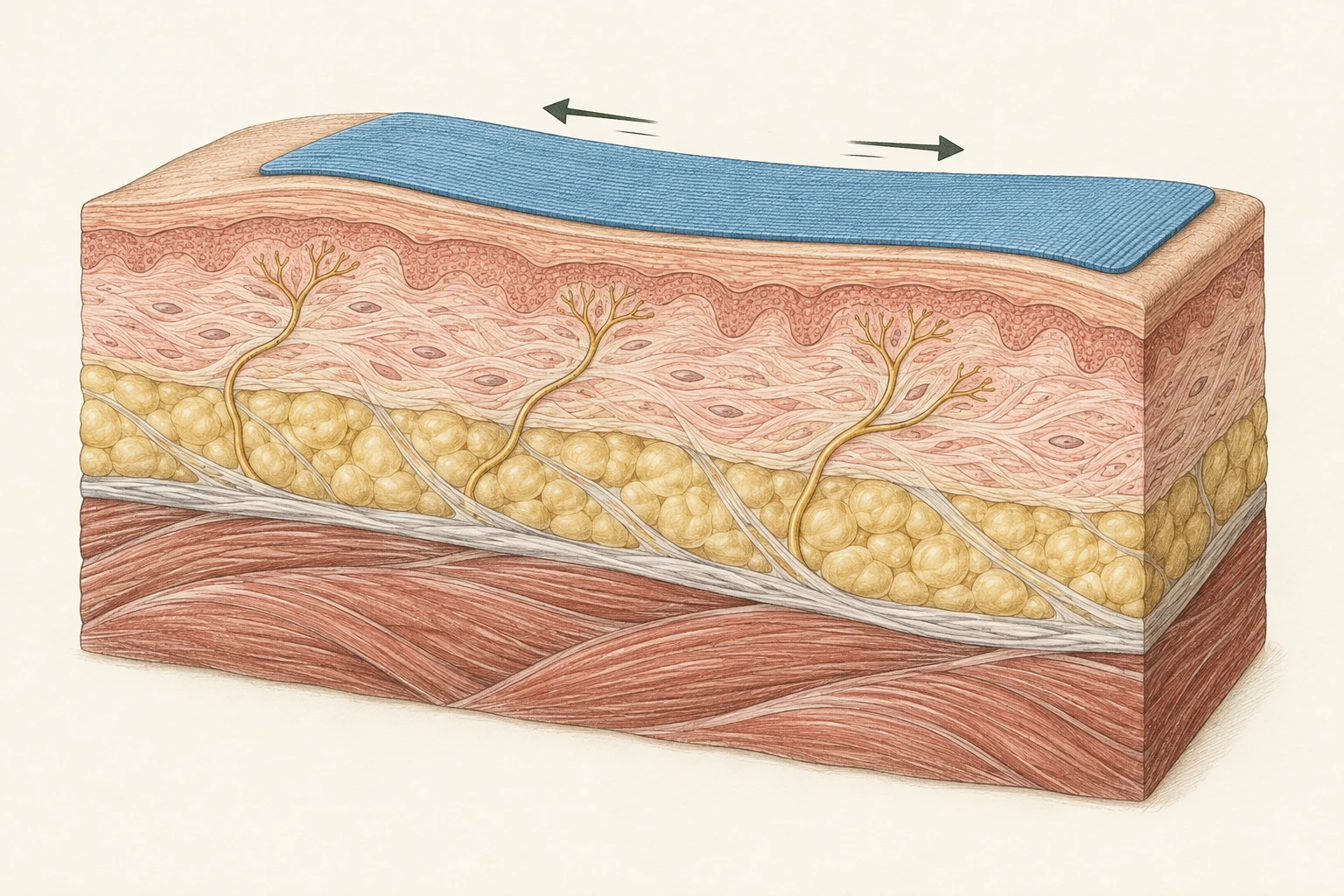
Research suggests that taping can change some skin sensations. People respond differently, so Chris pays attention to your comfort and the activities you want to return to.
The feel of tape on your skin can draw your attention to a shoulder, knee, or other area as you move.
Elastic tape follows the skin as it stretches and returns. Skin and the connective tissue beneath it move together.
Touch can influence how you experience discomfort. This is one possible reason a movement may feel easier with tape.
Reviewed by Chris Corona · Review confirmed