Before activity
Share your event timing. Agree on comfortable work and allow time to see how you respond.
 RECOVERYChoose your first visit
 THERAPEUTIC MASSAGE · AUSTIN, TX
Focused massage with Chris for everyday tension, demanding training weeks, and movement that feels uncomfortable. Choose the areas that need attention, with pressure and pace that feel right for you.
Choose your first visitFirst visit · 60 minutes $165 / 90 minutes $235
With Chris Corona · Texas massage license MT133029
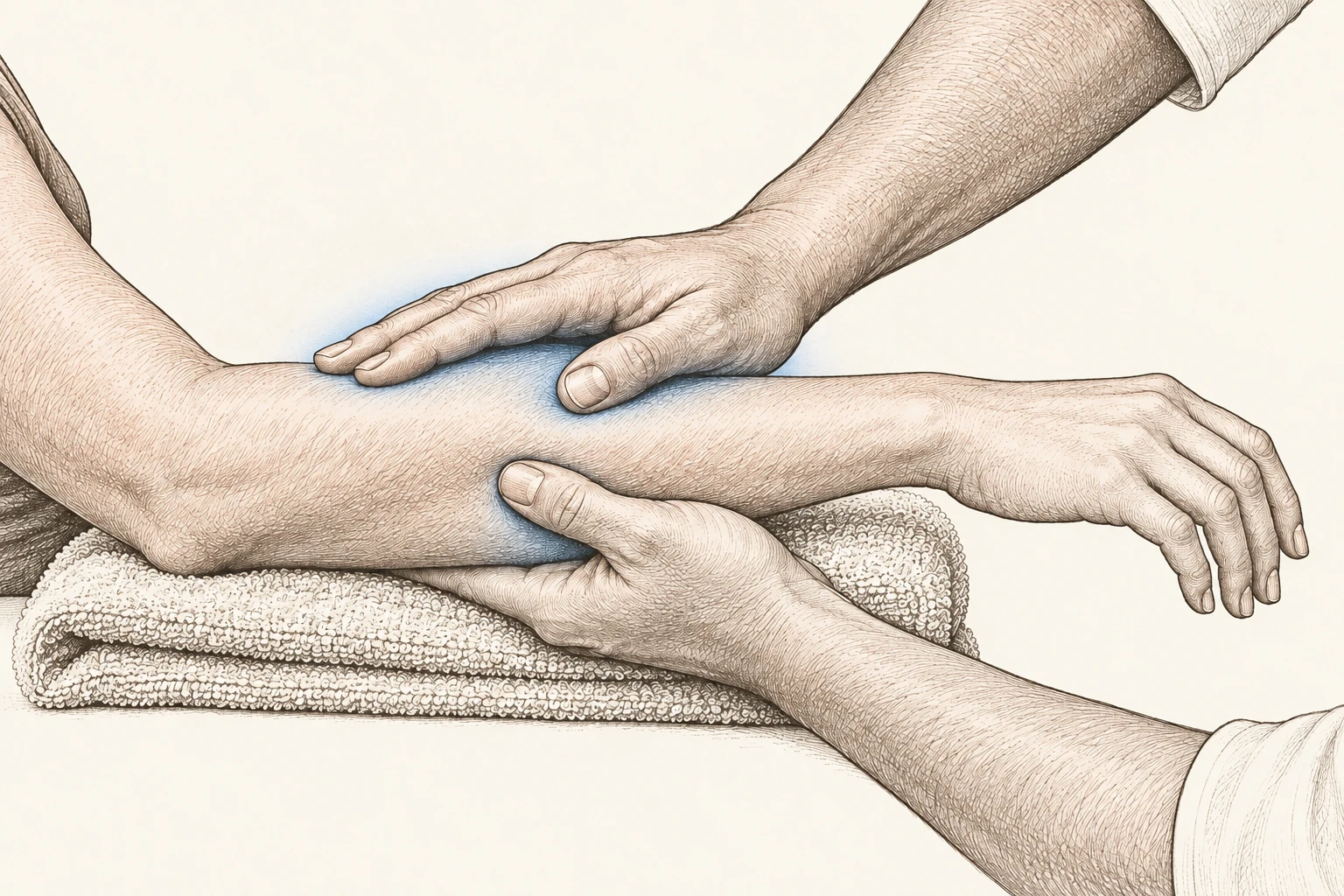
01 / FOR THE WAY YOU TRAIN
Care shaped by your sport, your schedule, and how you feel. The aim may be comfort after a hard session or attention to an area that feels overworked.
Discuss your next training session or event before treatment. The amount of pressure and time spent on an area can change with your plans and response.
Share your event timing. Agree on comfortable work and allow time to see how you respond.
Describe the type and location of soreness. New or unusual pain may need assessment before massage.
Use a familiar movement to check comfort. Massage can sit alongside rest and a suitable training plan.
A review of 29 studies found small improvements in flexibility and delayed muscle soreness, but no clear improvement in strength, jumping, sprinting, endurance, or fatigue.
02 / PRESSURE WITH A PURPOSE
Focused, slower work on the areas that need attention. Chris adjusts the pressure so you can stay comfortable and breathe easily.
Tell Chris how the contact feels. He can use lighter pressure, change position, or spend more time on an area.
Start with comfortable contact and adjust it together.
Slower work gives you time to notice and describe the response.
Tell Chris what feels easier and what still needs attention.
Sources: NCCIH: massage evidence and safety
03 / A SPECIFIC CONCERN
Focused massage for a muscle or joint-related concern, guided by your history, comfort, and a useful movement goal.
Start with what is difficult: turning your head, reaching overhead, or walking comfortably. A movement check helps guide the session and gives you a way to compare your response.
You may see this called medical orthopedic massage in the booking menu. Chris uses it to describe focused bodywork, alongside any diagnosis and restrictions from your clinician.
Describe what brings on symptoms and what you want to do more comfortably.
Agree on the area, position, and pressure. Work can change in response to your feedback.
Repeat a comfortable task. Discuss whether the change is useful and what needs further assessment.
04 / PUTTING IT TOGETHER
You do not need to select a massage style before booking. Explain your goals and agree on an approach with Chris.
Your first visit includes a conversation about health history, consent, comfort, and suitable care. Chris can discuss other methods if they fit your goals.
Supported, assisted movement can complement focused massage.
Explore FST ↗Massage and FST combined in one appointment, with the balance guided by your needs.
Explore FLEX ↗A method using controlled skin tension. Discuss suitability and any added cost before use.
Explore DFR ↗05 / CLEAR EXPECTATIONS
Share recent surgery, medicines that affect bleeding, fragile bones, and any restrictions from your clinician. Chris uses this information to plan your care.
Stop and tell Chris if you feel sharp or electric pain, new numbness, or dizziness. Unexplained or worsening symptoms may need medical assessment before bodywork.
Discuss how the session felt and what you want to work on next. There is no fixed course for everyone.
Massage may help some pain problems in the short term. Evidence varies by condition, and lasting benefit is less certain. Massage does not replace medical assessment or prescribed care.
NCCIH: massage evidence and safety ↗ Weerapong et al.: possible massage mechanisms ↗
YOUR NEXT STEP
Book your first visit with Chris. Bring your goals and questions. Chris will explain the options and begin care at a pace that feels right for you.
You do not need to decide first. Tell Chris about your goals, activity, and symptoms. Together, agree on a suitable approach.
No. You can ask for less pressure or stop at any point. Pain and next-day soreness are not targets.
No. Chris uses your history and comfortable movement checks to guide massage. He does not diagnose conditions or replace your clinician’s care.
Research does not show a clear improvement in strength, sprinting, jumping, or endurance. Some people may notice less soreness or a small change in flexibility.
FIRST-VISIT PRICES
New clients: choose “FIRST TIME CLIENT” in MassageBook.
First visits must be paid in full in advance.
Choose the amount of time that feels right for you. Both visits include a conversation, movement review, and hands-on care. The 90-minute option gives you another 30 minutes together.
The first 15–20 minutes are for your history, goals, and movement review. Hands-on care follows within your appointment time.
Your time is one-to-one with Chris in his private studio. The support, pace, and pressure follow your needs.
Optional kinesiology taping adds $20 to a first visit. DFR® is not usually needed at the first visit.
Returning client? Book your next sessionOPTIONAL READING
OPTIONAL READING
Massage applies physical forces and gives the nervous system sensory input. Several responses may occur together. No single mechanism explains every person’s result.
Signals from contact enter the nervous system. Pain processing may change; the response is individual.
Contact changes shape and loading while force is applied. The amount of pressure changes with your feedback.
Support and clear feedback may help movement feel easier. Check a familiar task within your comfort.
Concept illustrations of possible responses to massage. They are simplified and are not to scale.
The illustrations show possible contributors, not a sequence that happens in every session. Research on manual therapy helps form these explanations, but does not prove a specific massage technique works through one pathway.
Touch and pressure activate sensory receptors. Processing in the spinal cord and brain may change pain sensitivity.
Compression and movement temporarily change tissue shape and loading. This does not show that adhesions have been removed or tissue permanently lengthened.
Predictable contact, support, and control over pressure may help you relax and move with less apprehension. Responses differ.
Sources: Bialosky et al.: a proposed manual therapy model · Weerapong et al.: possible massage mechanisms
Reviewed by Chris Corona · Review confirmed