Notice the pattern
Tell Chris when the pain starts and how it changes with walking, standing, or running. A familiar pattern helps guide the discussion, but heel pain can have several causes.
 RECOVERYChoose your first visit
 PLANTAR FASCIITIS · AUSTIN, TX
Heel or arch pain can change your first steps in the morning, your workday, or your next run. Care with Chris brings together calf release, gentle ankle joint mobilization, and supported FST movement. KT Tape can add heel and arch support when it fits your comfort and care plan.
Choose your first visit ↗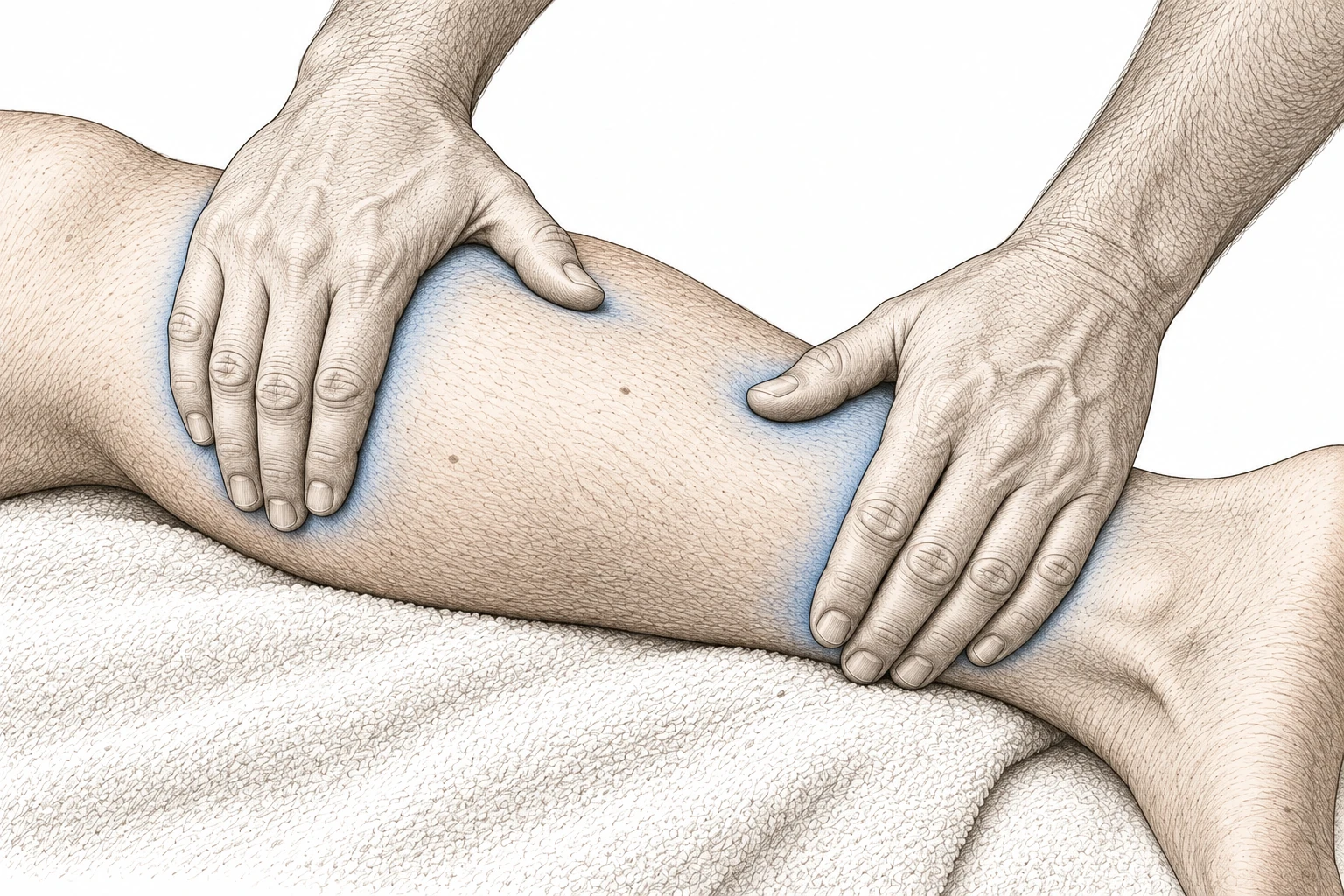
Before you visit: health and comfort guidance ↓
01 / UNDERSTAND YOUR MOVEMENT
The plantar fascia is a strong band of tissue under your foot that supports the arch. Plantar fasciitis often causes pain near the underside of the heel, especially with the first steps after rest.
Tell Chris when the pain starts and how it changes with walking, standing, or running. A familiar pattern helps guide the discussion, but heel pain can have several causes.
The gastrocnemius and soleus are the main calf muscles. Tightness here can increase the demands on the foot. Calf comfort and flexibility are useful parts of the care discussion.
Your ankle bends as you move over the foot in a step. Chris checks for comfortable movement and relevant limits, including bringing the foot toward the shin.
Read more: AAOS: plantar fasciitis, symptoms, and care
02 / RELEASE · MOBILIZE · SUPPORT
Start with a task you want to make easier, such as a short walk. Chris can combine calf work and supported FST movement with KT Tape, then ask you to repeat the same task and describe the response.
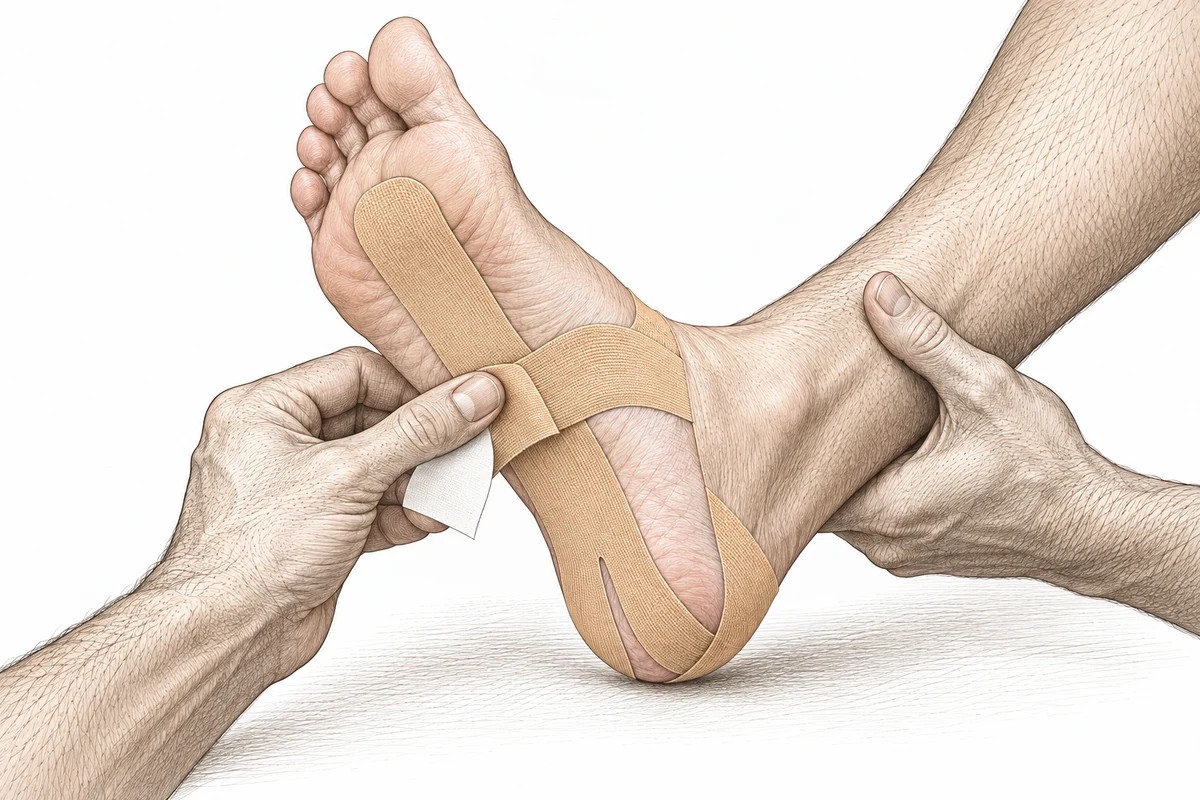
The KT Health Plantar Fasciitis Tape System shown here uses a sole strip, heel tabs, and a separate arch strip. Chris checks your skin and selects an application that fits your foot. Compare the same short walk after hands-on care and again with tape to see whether it adds useful comfort.
With your leg supported, Chris uses hands-on calf work to help ease tension and make movement more comfortable. He adjusts pressure and knee position to work with the gastrocnemius and soleus. Tell him if contact feels sharp or increases your heel pain.
Explore massage ↗Chris supports your heel and lower leg while gently mobilizing the ankle through a suitable range. FST can pair this movement with calf stretching. Your feedback guides the angle, pace, and amount of movement.
Explore Fascia Stretch Therapy ↗Hands-on care can fit alongside your clinician’s exercise and activity plan. Include prescribed foot and calf exercises, strength work, and changes to training load.
The 2023 plantar heel pain guideline supports manual care for relevant joint and soft tissue restrictions, calf and plantar fascia stretching, and foot taping with other rehabilitation care. Taping is a short-term aid. These recommendations cover several methods and tape types; they do not establish a benefit for a specific retail brand.
The FST research reviewed for this site is limited and does not establish FST, or FST plus KT Tape, as a proven treatment for plantar fasciitis. The calf-and-ankle approach described here applies related evidence to individual mobility goals. The KT Tape guide supplies product application information; it does not prove added benefit from combining tape with FST.
JOSPT: Heel Pain—Plantar Fasciitis, 2023 guideline · FST low-back-pain pilot: a different condition, without a comparison group
03 / YOUR ACTIVITY · YOUR COMFORT
Tell Chris about first-step pain, time on your feet, footwear, recent training changes, and any diagnosis or rehabilitation plan. Together, choose a useful way to check comfort during the visit and afterward.
For runners, include recent mileage, hills, and race plans. For work or daily life, describe standing and walking time. Track how your heel feels later that day and the next morning; one easier walk does not establish readiness for a harder run.
Care for runners ↗Mention adhesive reactions, reduced foot sensation, or fragile skin. Tape will not be applied over damaged or irritated skin. Chris explains wear and removal for the chosen product. Remove it gently if it causes itching, burning, or discomfort.
Get a medical assessment for persistent or worsening heel pain, tingling, or loss of sensation. If you have diabetes and new heel pain, contact your clinician. Seek urgent care after an injury if you cannot walk, have severe pain, or heard a snap or pop.
Read more: KT Tape: plantar fasciitis product and application guide · NHS: heel pain and when to seek medical care
YOUR NEXT STEP
You do not need to select a technique before booking. The first visit gives you and Chris time to discuss your goals and begin suitable care.
The main focus is calf release and ankle mobility. Chris can include suitable foot work and supported stretching, with pressure and range adjusted to your symptoms and care plan.
No. Taping is optional. Chris uses KT Tape brand products and checks whether an application helps a useful task. He will explain any added cost before application.
Discuss the amount and type of running with your treating clinician, especially if pain is persistent or changes your stride. Follow your rehabilitation plan. Temporary relief during a session or with tape is only one part of deciding when to increase activity.
FIRST-VISIT PRICES
New clients: choose “FIRST TIME CLIENT” in MassageBook.
First visits must be paid in full in advance.
Choose the amount of time that feels right for you. Both visits include a conversation, movement review, and hands-on care. The 90-minute option gives you another 30 minutes together.
The first 15–20 minutes are for your history, goals, and movement review. Hands-on care follows within your appointment time.
Your time is one-to-one with Chris in his private studio. The support, pace, and pressure follow your needs.
Optional kinesiology taping adds $20 to a first visit. DFR® is not usually needed at the first visit.
Returning client? Book your next sessionReviewed by Chris Corona · Review confirmed