Reach and pull repeatedly
Swimming repeats arm movement against water resistance. Stroke choice, pace, and paddle work change the effort around the shoulder.
 RECOVERYChoose your first visit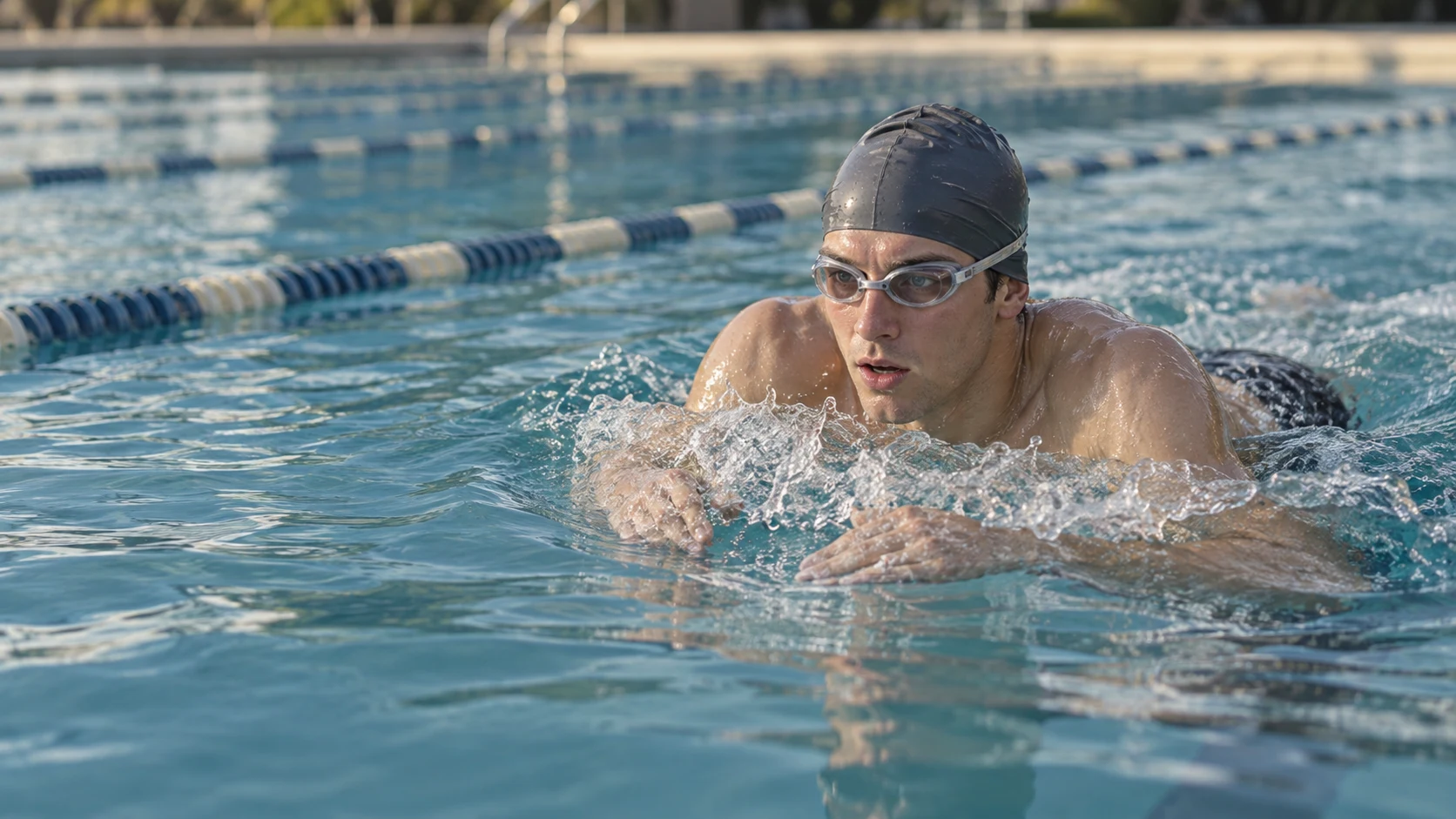
SWIMMING · AUSTIN, TX
Work one-to-one with Chris on the shoulder, trunk, or hip movement that concerns you. Your stroke, training schedule, comfort, and goals guide stretch therapy and massage, alongside any guidance from your medical team.
See what your first visit includesOne-to-one with Chris · First visit: 60 minutes $165 / 90 minutes $235
Chris works with competitive athletes, including Division I athletes.
Booking for a teen athlete? See what to expect ↓
Before you visit: symptoms that need medical care ↓
01 / DEMANDS
Tell Chris your main strokes, weekly distance, and dry-land schedule. Share the goal you are working toward, from a qualifying time to a college season, and any recent training changes. A breaststroke kick and a freestyle reach place different demands on your body.
Swimming repeats arm movement against water resistance. Stroke choice, pace, and paddle work change the effort around the shoulder.
Rotation and breathing timing help connect the arms with the rest of the body. Tell Chris if a turn or breath feels limited on one side.
Breaststroke asks for a different hip and knee movement from a flutter kick. Wall turns and push-offs add repeated leg effort.
02 / CONCERNS
Tell Chris which part of your stroke, turn, or push-off feels different, when it starts, and whether you have changed your movement to work around it. Describe what you want to feel more comfortable doing.
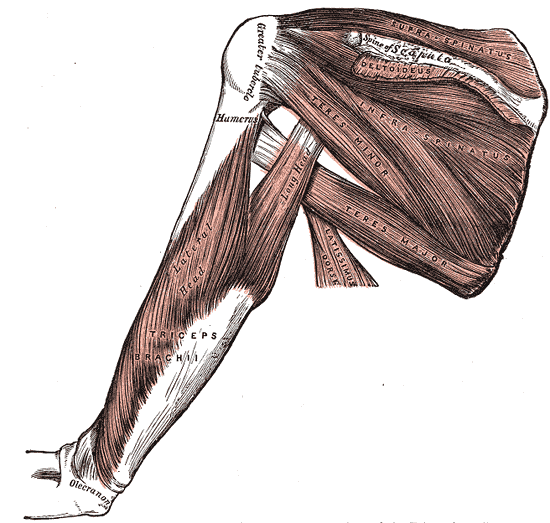
Tell Chris when discomfort begins: entry, pull, recovery, or after the session. The shoulder muscles guide the arm while the shoulder blade moves. Repeated pain or loss of strength calls for assessment.
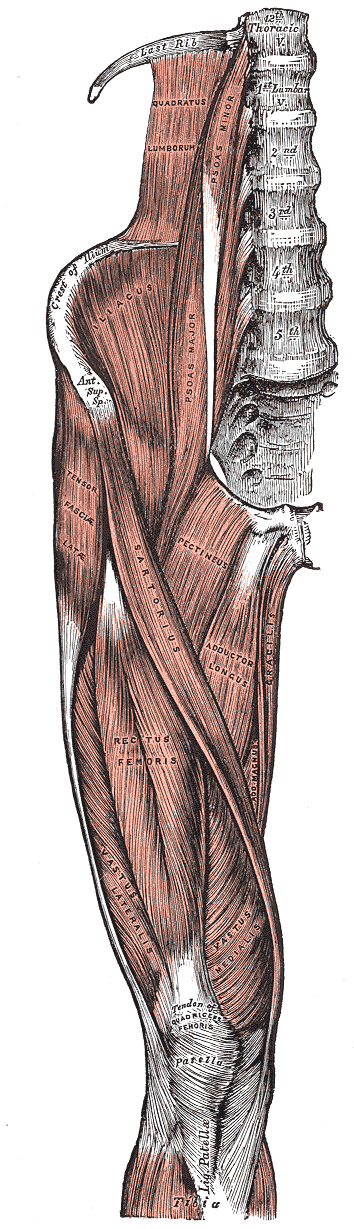
Describe your stroke and whether discomfort appears during the kick, wall turn, or push-off. The hip muscles help move and control the thigh. Knee pain during breaststroke also deserves attention before stretching further.
03 / FST
Start with the reach, turn, or hip movement that matters to your stroke. In Fascial Stretch Therapy (FST), Chris uses supported movement, compression, and stretching. Your history, comfort, and feedback guide the position, angle, and range.
01 / IDENTIFY THE MOVEMENT
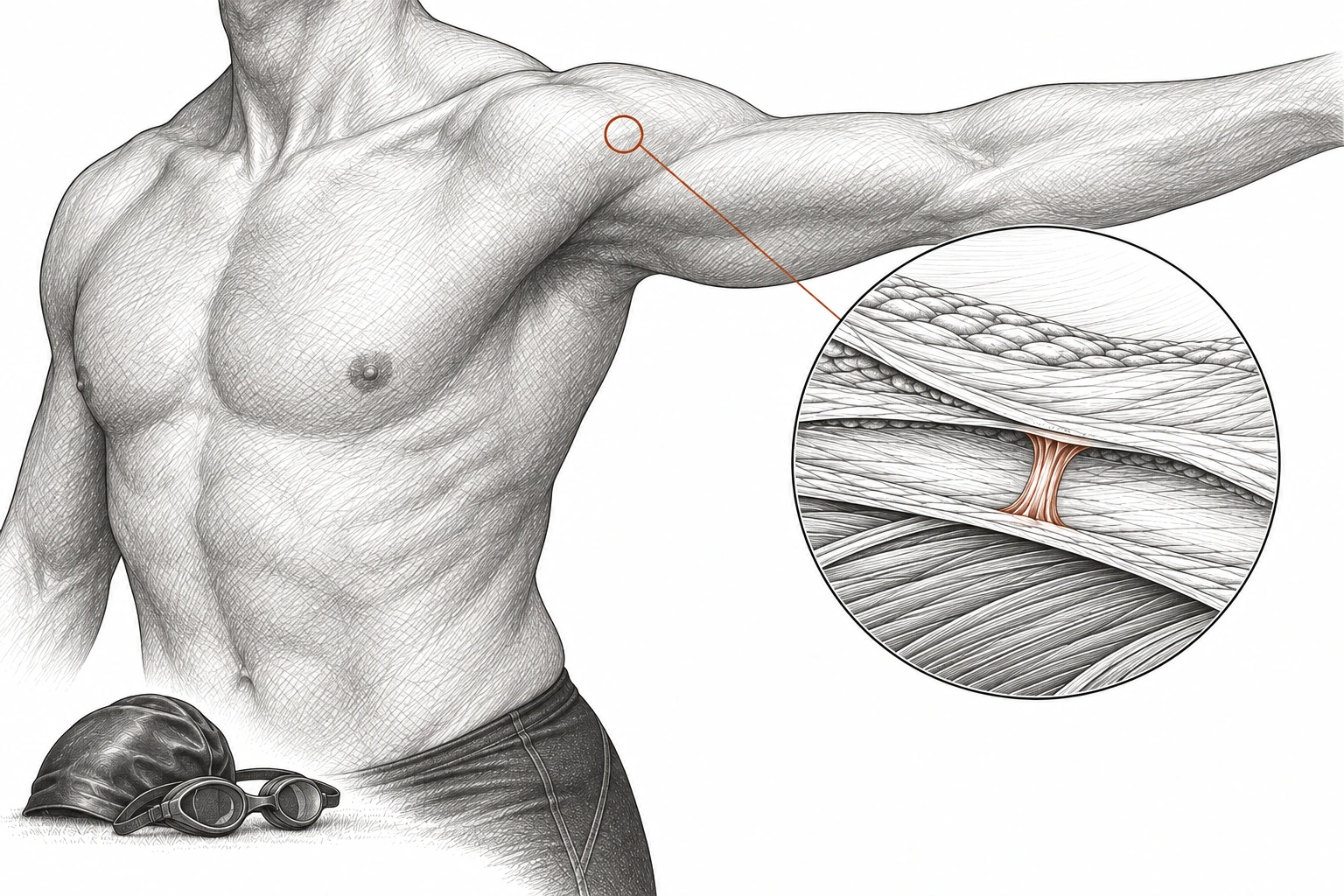
Choose a gentle arm reach, turn, or hip movement with Chris, based on the stroke and concern you describe. The illustrated reach is one possible starting point.
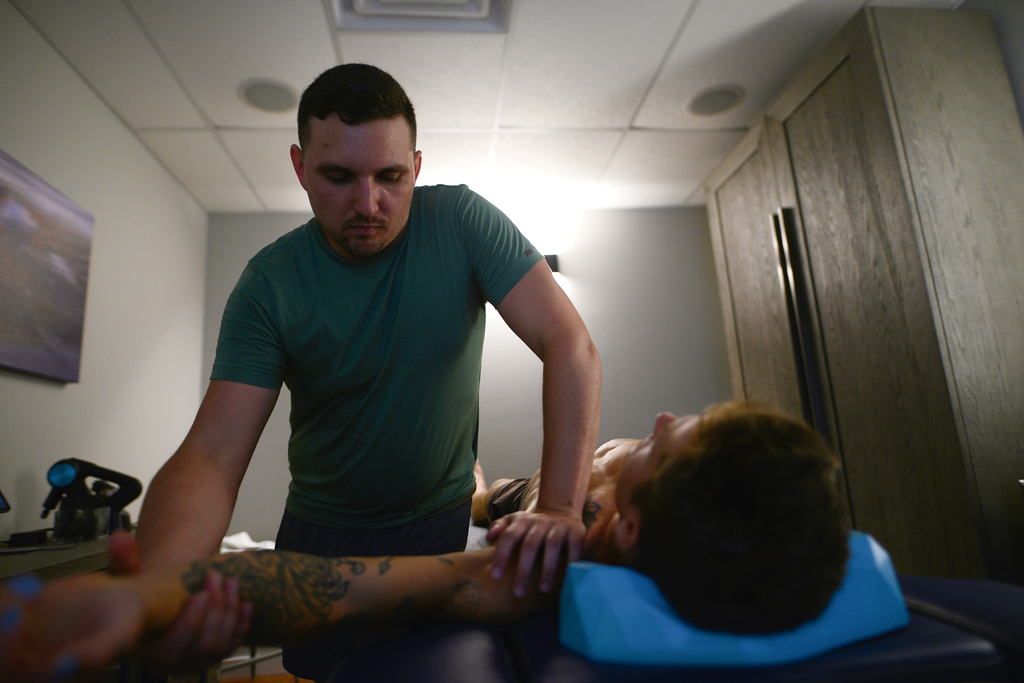
02 / CHRIS GUIDES THE MOVEMENT
On the table, Chris can explore shoulder movement with the arm and trunk supported. Tell him how it feels as he changes the angle and pace. He can reduce the movement or stop at any point.
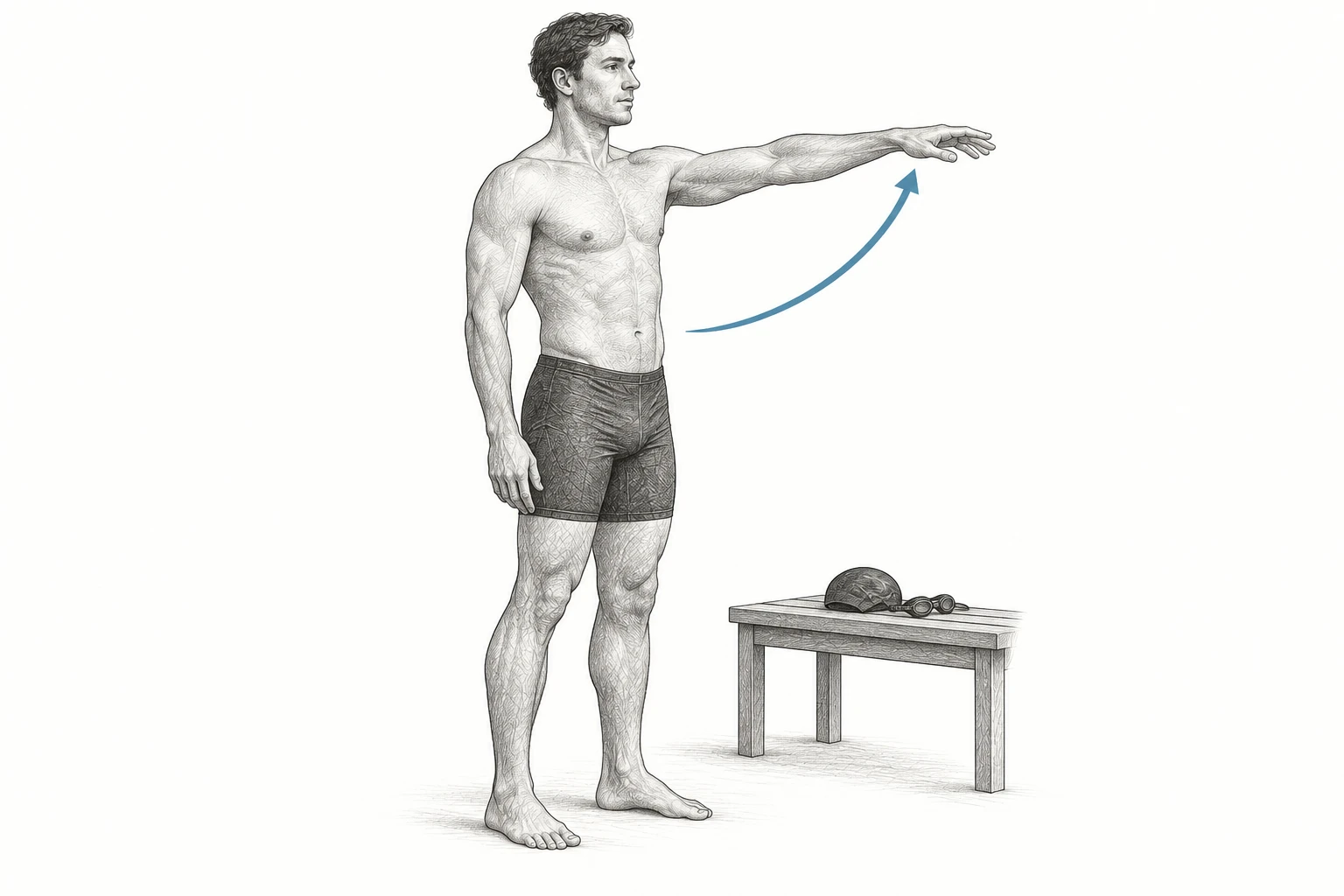
03 / REVIEW WITH CHRIS
Try the same reach, turn, or hip movement again. Describe what feels different and what still needs attention.
Work with Chris at each visit. He listens to what has changed, adjusts care with your feedback, and reviews the movement with you before you discuss the next step.
04 / OTHER TREATMENTS
You do not need to decide whether your shoulder, upper back, or hip needs stretching or massage. Chris explains suitable options, taking account of your age, medical guidance, and response.
Supporting methods are included when selected for FLEX. Optional first-visit tape is $20. Chris explains any charge for another appointment type before you agree to it.
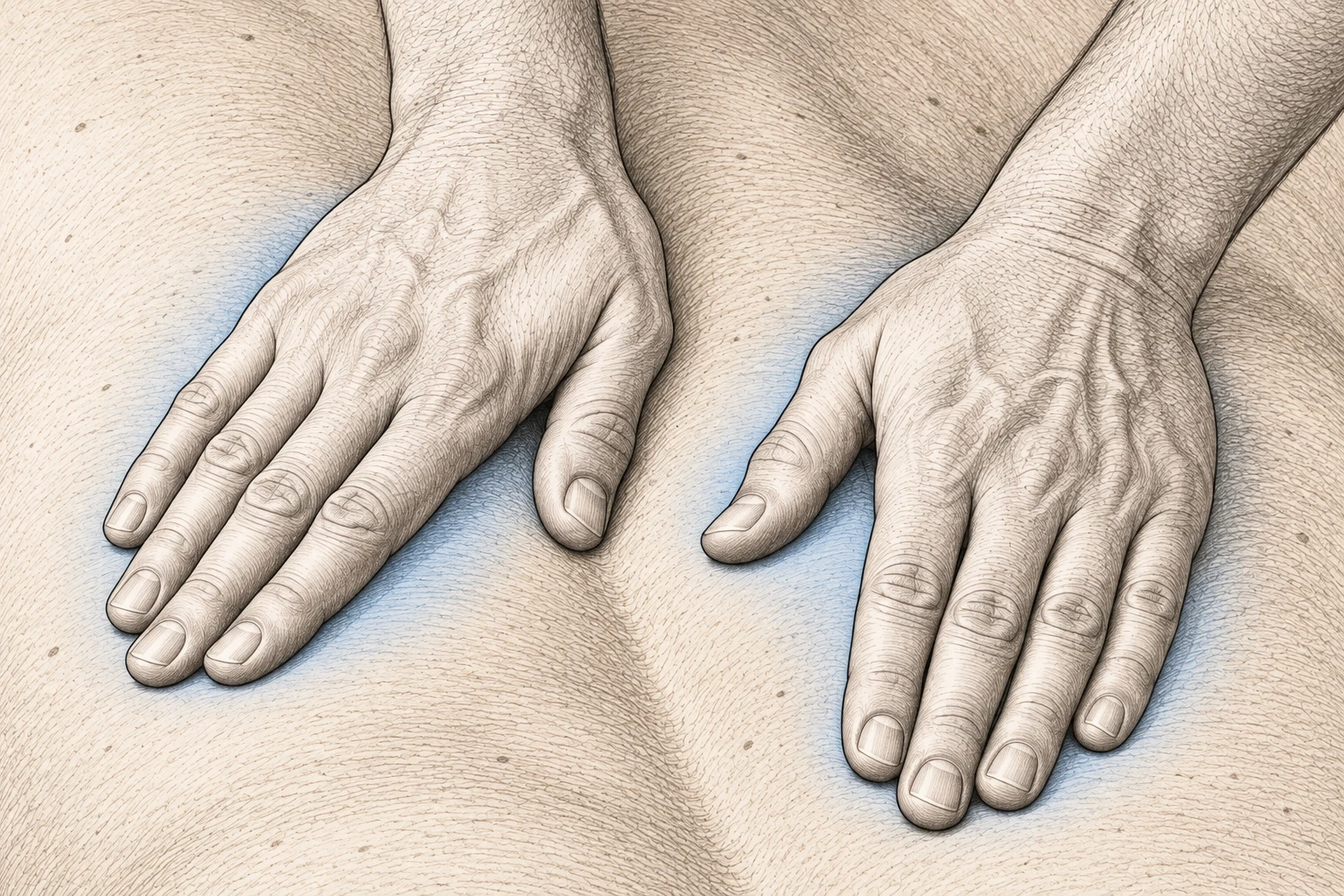
With the area supported, Chris can vary the position and focus massage on your shoulder, upper back, or hip. Pressure follows your feedback. Massage and FST can share a FLEX session.
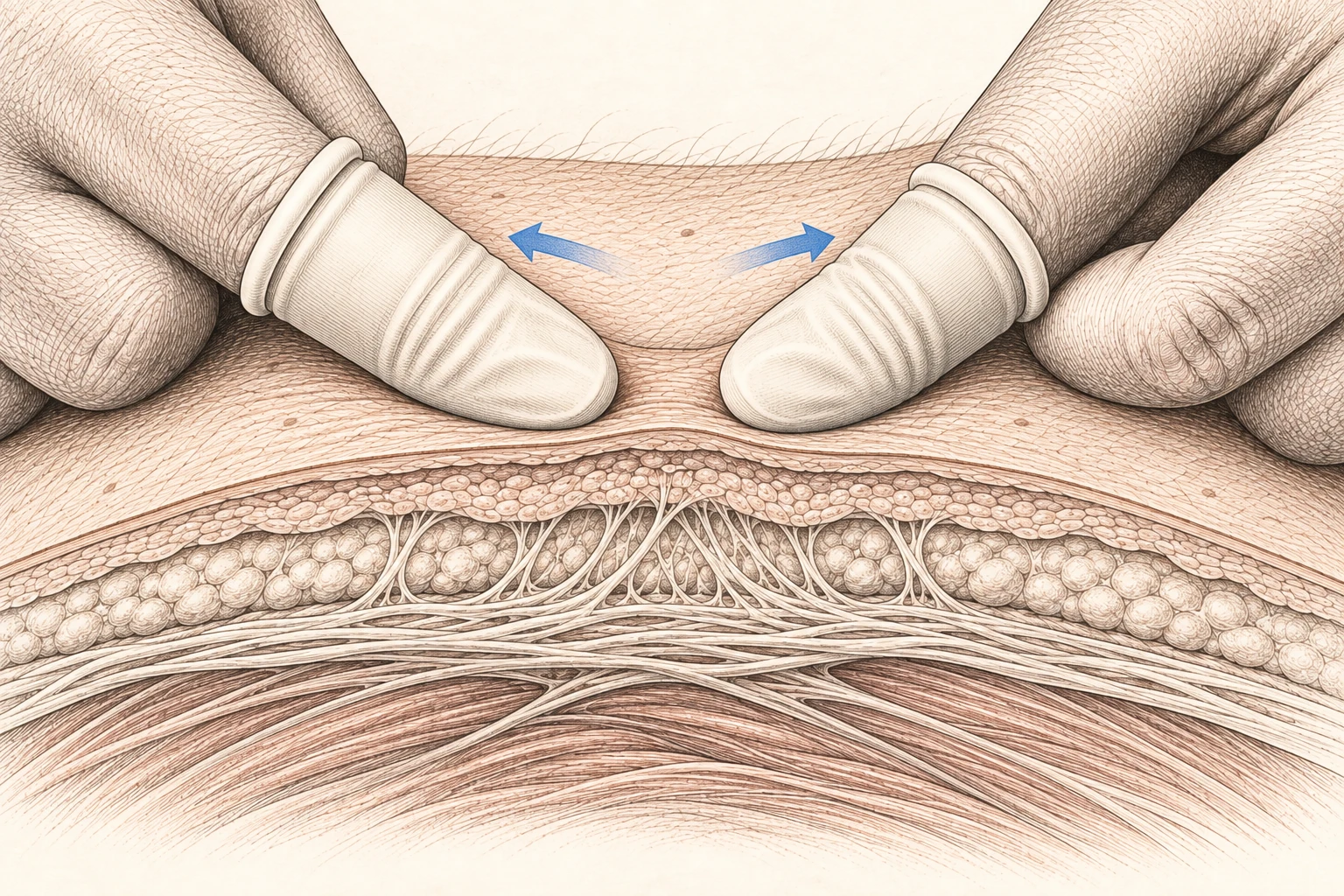
If a local pulling sensation affects a gentle standing arm reach, Chris may try focused skin contact with the area supported. He then asks you to repeat the movement and describe the response.
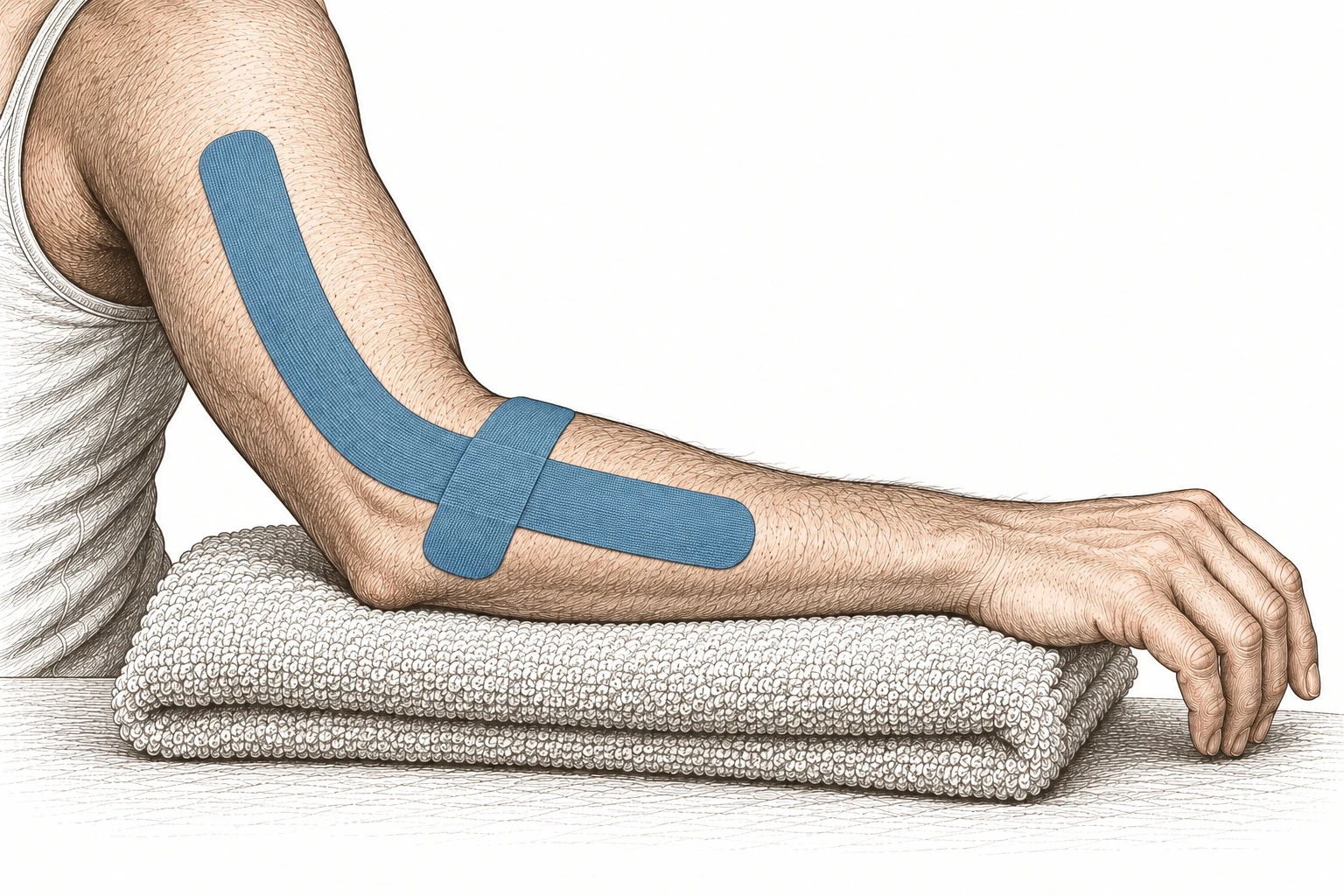
AN OPTIONAL ADDITION
Kinesiology tape may be tried as a skin-contact cue during the movement you explored. Chris checks skin and adhesive sensitivity, explains removal, and compares the movement with you. It is optional.
05 / ADJUSTING CARE
Your feedback can change the session at any time.
Tell Chris about shoulder instability, previous dislocation, or a very large available range. He can use more support and less range. Greater reach is not always the goal.
Mention chlorine irritation, a rash, or any open skin. Chris can leave out DFR® or kinesiology tape if the skin is not suitable. Kinesiology tape will not be applied over damaged or irritated skin.
Tell Chris about sharp pain, tingling, numbness, dizziness, or increasing discomfort. He can stop, change the method, or recommend medical assessment. Share any treatment restrictions before you start.
06 / ASSESSMENT
Stop the swim when symptoms affect safe movement or breathing. Get out of the water with help if needed.
Arrange an assessment for repeated shoulder or knee pain, reduced strength, or pain that disturbs sleep. Share your stroke and training load with the clinician and Chris.
Get prompt medical advice for sudden severe shoulder pain or inability to move the arm normally. Do not use stretching or massage to work through a new injury.
If you are experiencing severe breathing difficulty or loss of consciousness in or after leaving the water, you need emergency care. Call 911. Alert the lifeguard and follow the emergency dispatcher’s instructions.
AAOS: shoulder symptoms and assessment · American Red Cross: water safety and emergency response
07 / YOUR FIRST VISIT
Appointment time includes intake and hands-on care. You do not need to choose a method before your first visit.
Discuss your activity, health history, and the movement you want to make more comfortably.
Chris explains the intended approach and adjusts care with your feedback.
Try the same movement again. Discuss what feels different and agree on the next step.
FOR PARENTS AND TEEN ATHLETES
Bring your questions, the training schedule, and any guidance from your athlete’s medical team. Chris explains the proposed care and listens directly to the athlete’s goals and feedback. They can ask for a change, pause, or stop at any time.
Wear comfortable clothes that allow movement. Bring the swimmer’s main strokes, weekly distance, upcoming meets, recent injury details, and current medical restrictions. If you are unsure whether the visit fits their needs, call Chris before booking.
No. Select a first visit. You and Chris discuss your training, health history, and goals, then review a movement together. Chris explains the suitable care options and adjusts the session with your feedback.
Yes. Tell Chris your main stroke and whether reach, rotation, or kick feels limited. He can choose a comfortable movement to check and adapt the supported care to that area.
Share distance, stroke mix, paddle use, dry-land training, and any shoulder instability. Tell Chris about chlorine irritation before skin contact or tape.
Bring any guidance and restrictions from your athletic trainer, physical therapist, or physician. Chris uses that information when selecting suitable bodywork. Your qualified medical team guides injury rehabilitation and return-to-sport decisions.
YOUR NEXT STEP
Choose the time that feels right.
Both durations include time to discuss your goals and begin care. Choose your first visit below.
FIRST-VISIT PRICES
New clients: choose “FIRST TIME CLIENT” in MassageBook.
First visits must be paid in full in advance.
Choose the amount of time that feels right for you. Both visits include a conversation, movement review, and hands-on care. The 90-minute option gives you another 30 minutes together.
The first 15–20 minutes are for your history, goals, and movement review. Hands-on care follows within your appointment time.
Your time is one-to-one with Chris in his private studio. The support, pace, and pressure follow your needs.
Optional kinesiology taping adds $20 to a first visit. DFR® is not usually needed at the first visit.
Returning client? Book your next session4111 Marathon Blvd, Suite 110
Austin, TX 78756
Tell Chris about practice, competition, and any medical restrictions.
Reviewed by Chris Corona · Review confirmed