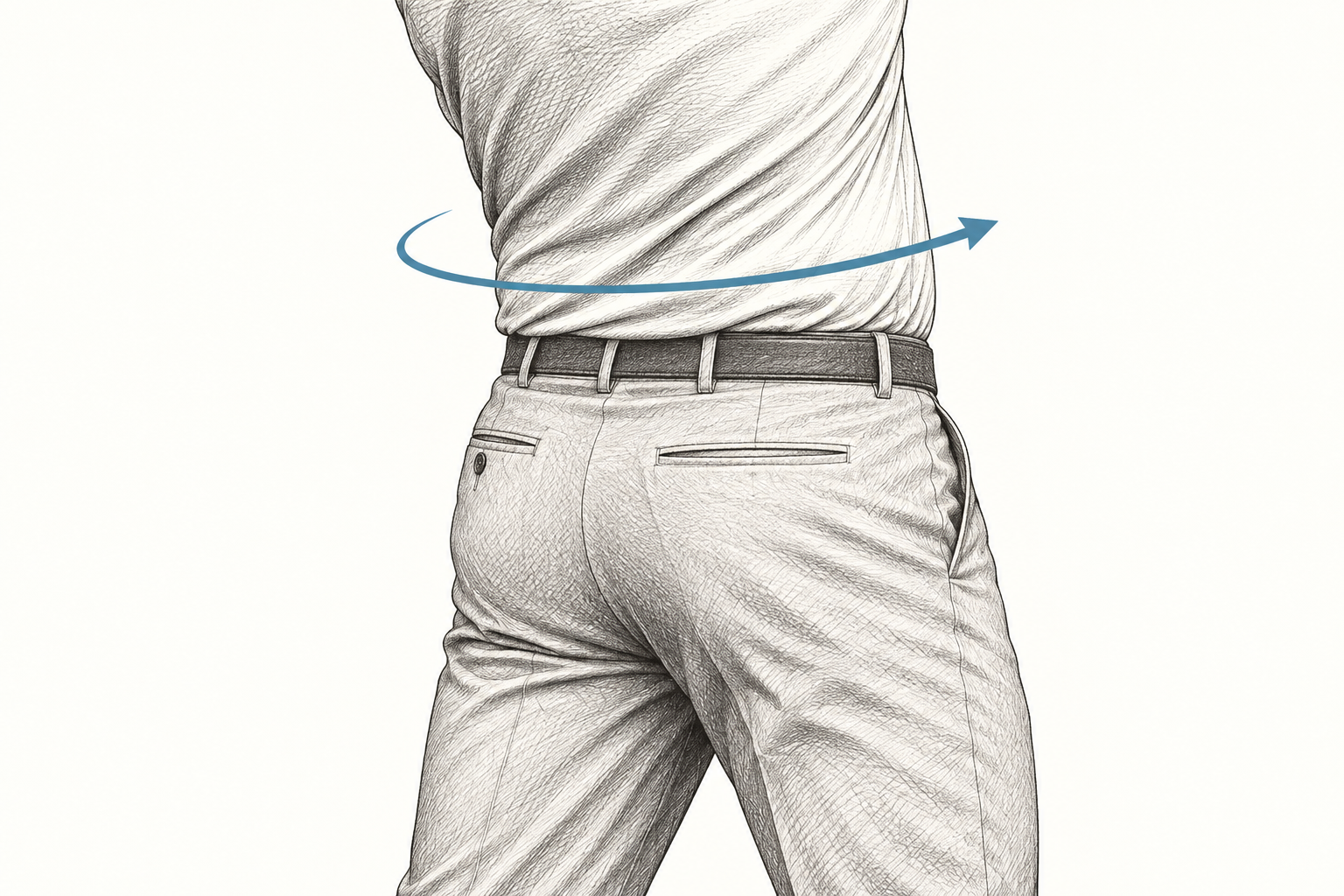
A coordinated turn.
Your rib cage, spine, and pelvis move together. Hip motion and trunk control are part of that movement; more flexibility alone is not the whole goal.
 RECOVERYChoose your first visit
FST & MASSAGE FOR GOLFERS · AUSTIN, TX
The turn. The walk. The last few holes.
Assisted stretch therapy with Chris Corona, with support and movement shaped around how you feel on the course and after you play.
One-to-one with Chris · First visit: 60 minutes $165 / 90 minutes $235
Before you visit: symptoms that need medical care ↓
01 / WHAT GOLF ASKS OF YOUR BODY
A swing combines trunk and hip rotation, arm movement, grip, and balance. A round adds walking, repeated shots, and time on your feet.
Your rib cage, spine, and pelvis move together. Hip motion and trunk control are part of that movement; more flexibility alone is not the whole goal.
Your shoulders guide the arms. Forearm muscles and tendons work through grip and wrist movement as the club changes speed and direction.
A range session, a full round, and several days of play place different demands on you. Tell Chris what you play, how often, and what has changed.
Background: Golf movement and low-back loading.
02 / COMMON CONCERNS & SYMPTOMS
From a stiff backswing to an aching grip, tell Chris what gets in the way of your game. He will use those details to focus your session.
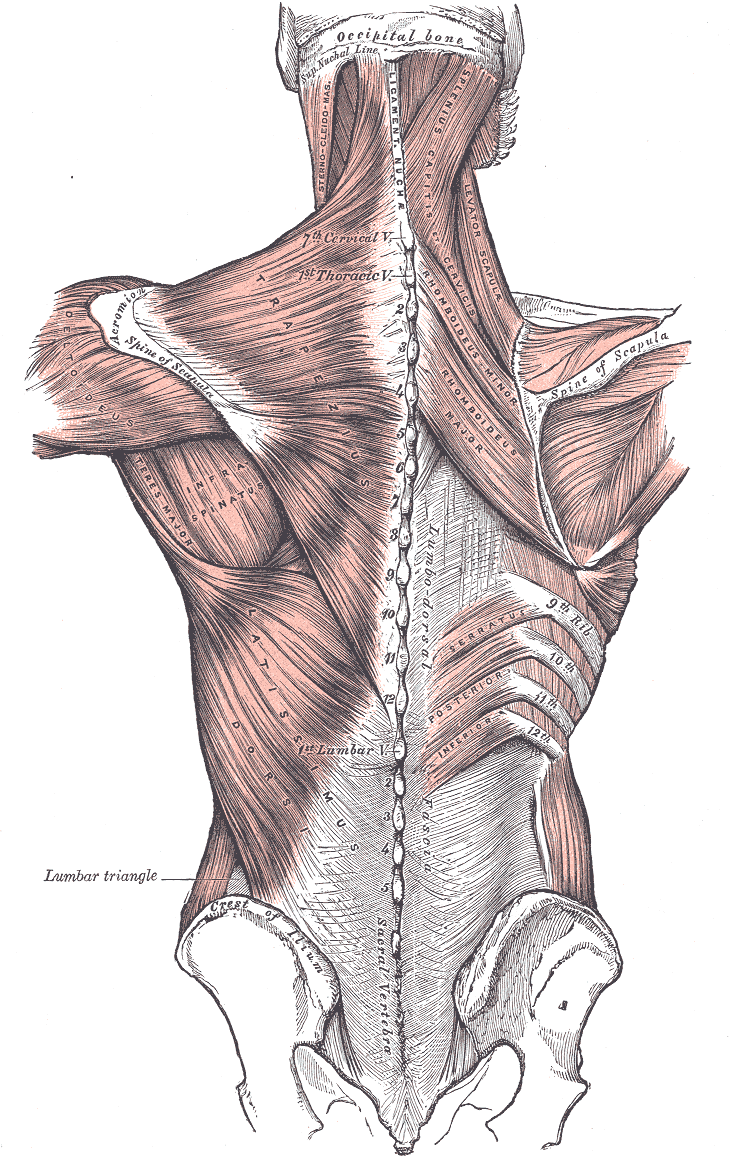
You may notice stiffness at the top of the backswing, an ache after repeated shots, or hip discomfort during the walk.
The anatomy: your back muscles and connective tissue work with your hips as you turn. Chris looks at how these regions move together, as well as the area where you feel discomfort.
Tell Chris: “I notice it when I turn, after nine holes, or when I get out of the car.”
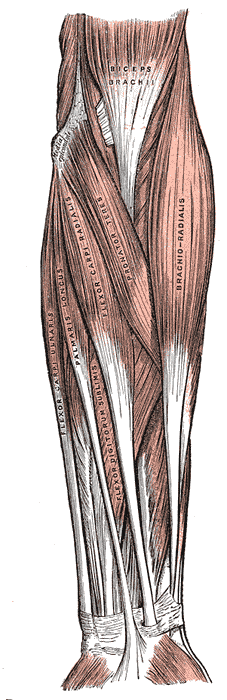
Gripping or bending the wrist may bring on inner-elbow or forearm discomfort. Persistent pain, grip weakness, or tingling deserves assessment.
The anatomy: several muscles used to bend your wrist attach near the inner elbow. Tell Chris whether the discomfort starts with gripping, impact, or repeated practice.
Tell Chris: “It hurts with grip pressure, at impact, or after practice.”
Describe the exact movement: reaching across your chest, raising your arm, turning the forearm, or holding the club. Include catching, weakness, numbness, and any recent injury. Chris can discuss whether hands-on care fits or a clinical assessment should come first.
Anatomy and symptoms: Royal Orthopaedic Hospital guide to golfer’s elbow.
03 / FST & YOUR MOBILITY GOALS
Turn with more comfort. Move through your swing with less stiffness. Feel more at ease after a round. Tell Chris which goal matters most, so he can focus your FST session on the movement you want to improve.
01 / TELL CHRIS WHERE YOU FEEL IT
Show Chris the part of your swing that feels tight or uncomfortable. He will check your hip and trunk movement, then help you find a modified movement to use as a starting point. You will repeat it after treatment to see how it feels.
Your goal gives the session a focus—for example, a more comfortable backswing or an easier turn through the ball.
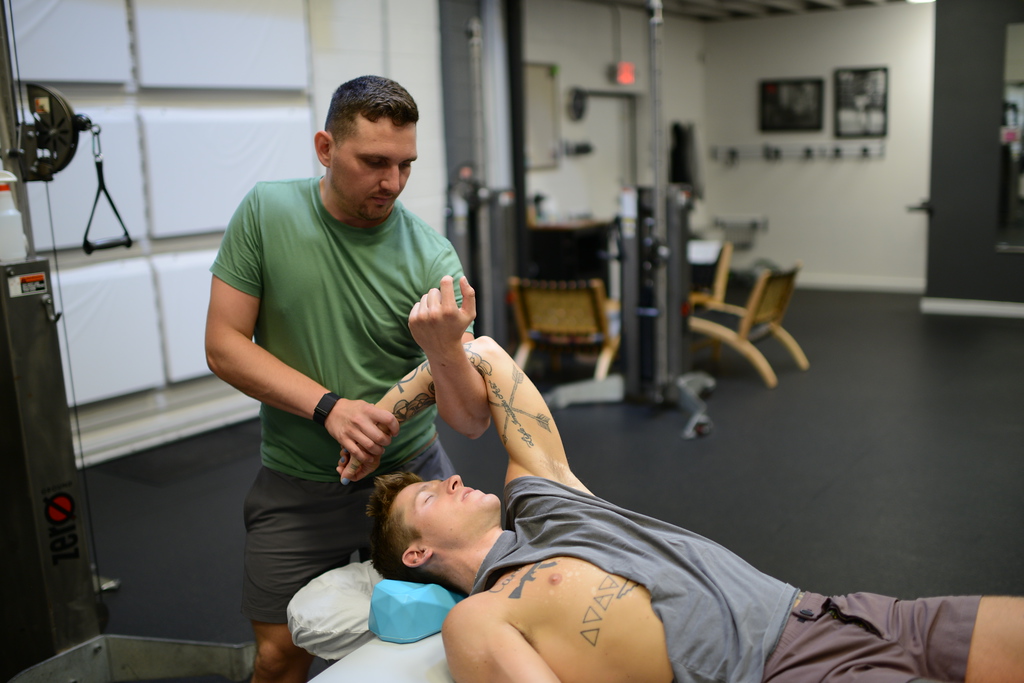
02 / CHRIS GUIDES THE MOVEMENT
You rest on the treatment table while Chris supports and moves your body through a series of stretches. He combines movement with compression and adjusts the angle, pressure, and pace to how you feel.
Chris may focus on hip movement, trunk rotation, or a combination, based on your movement check. You give feedback throughout, so he can adjust the stretch to you.
03 / REVIEW YOUR MOVEMENT WITH CHRIS
Chris will ask you to repeat the modified movement you tried at the start. You describe how it feels; he checks your range and how you move.
Together, you compare what changed and what still needs attention. That guides the next part of your session and your follow-up plan.
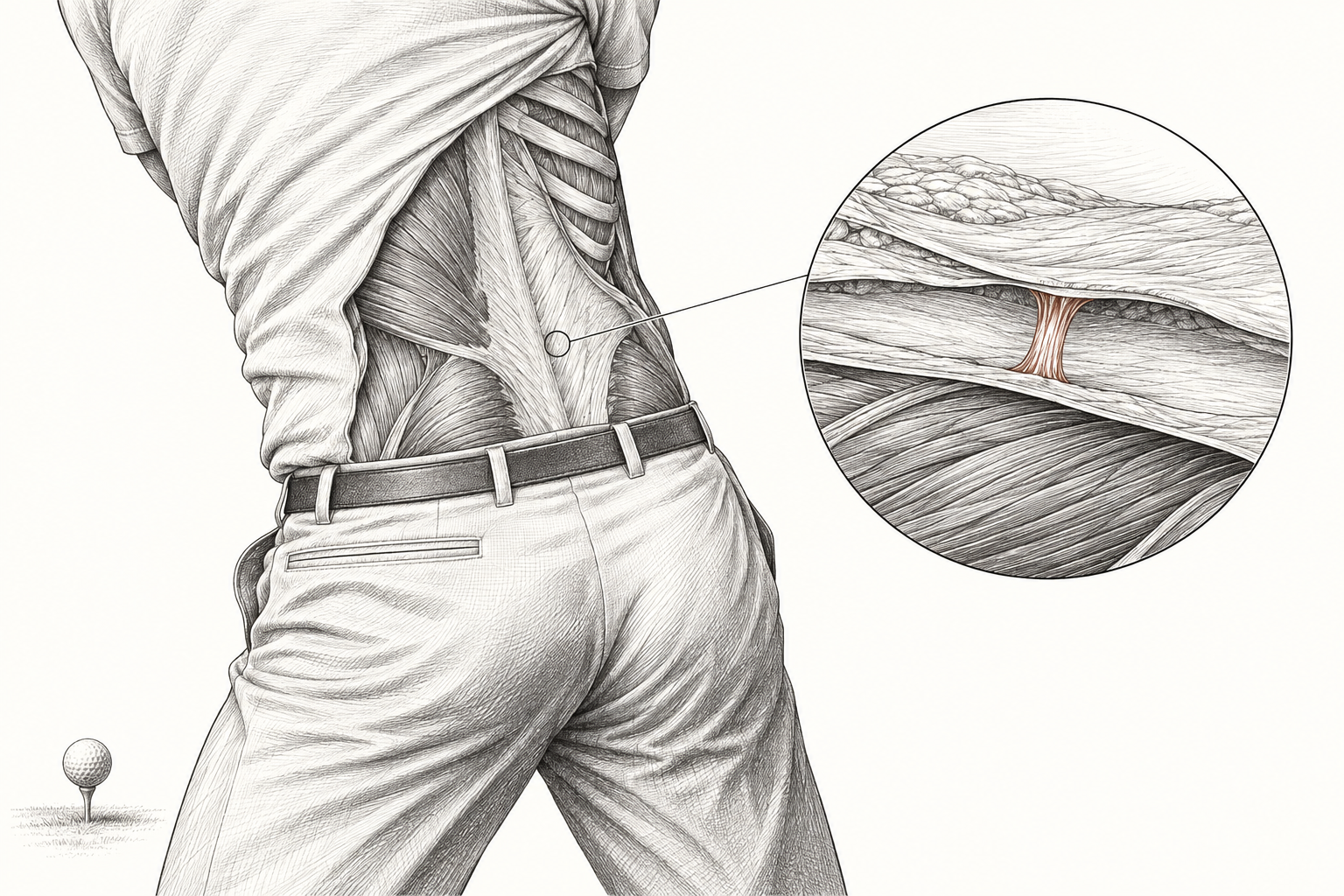
Fascia is connective tissue around and between muscles.
Ultrasound research has found differences in movement between lower-back fascia layers in people with and without chronic back pain. This helps researchers study how connective tissue and muscle activity relate to movement.
A separate study found short-term changes in calf muscle and fascia stiffness after static stretching. These studies help explain the interest in tissue movement; research on specific treatments and golf outcomes is still developing.
Tell Chris how the movement feels so he can adjust your session.
04 / TRADITIONAL MASSAGE, DERMAL-FASCIAL RESTORATION® & KINESIOLOGY TAPE
Different concerns call for different approaches. Chris can combine FST with focused massage, DFR® for a local pulling sensation, or kinesiology tape as a movement cue. He recommends the combination that fits your goals.
Supporting methods are included when selected for FLEX. Optional first-visit tape is $20. Chris explains any charge for another appointment type before you agree to it.
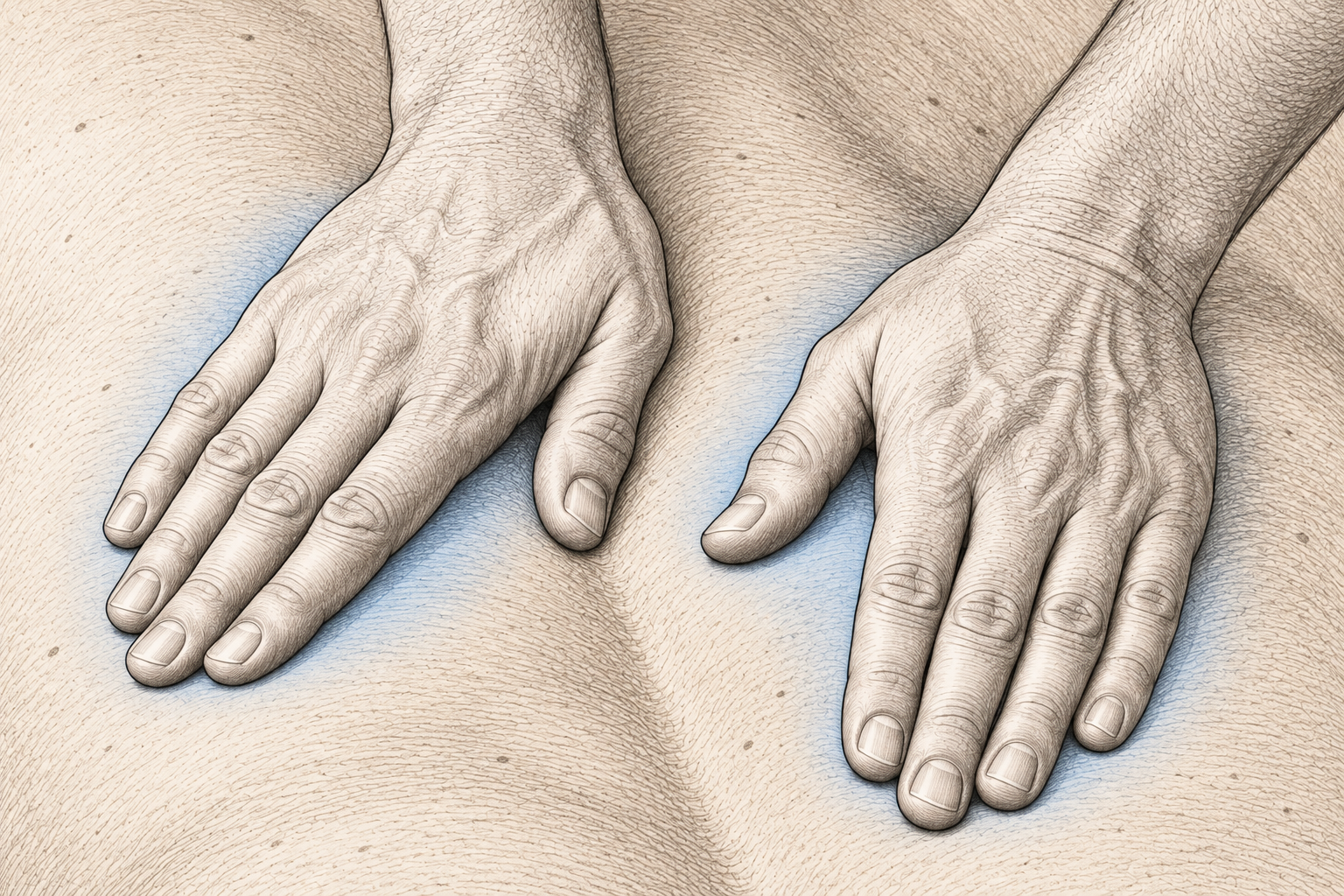
For an aching back after a round or tired shoulders and forearms after practice, massage gives Chris time to work directly with the muscles that feel overworked.
Paired with FST: Supported movement lets Chris vary the position of your hip or shoulder, then focus massage on the muscles involved in your turn. He can move between stretching and muscle work, adjusting the angle and pressure to your comfort.
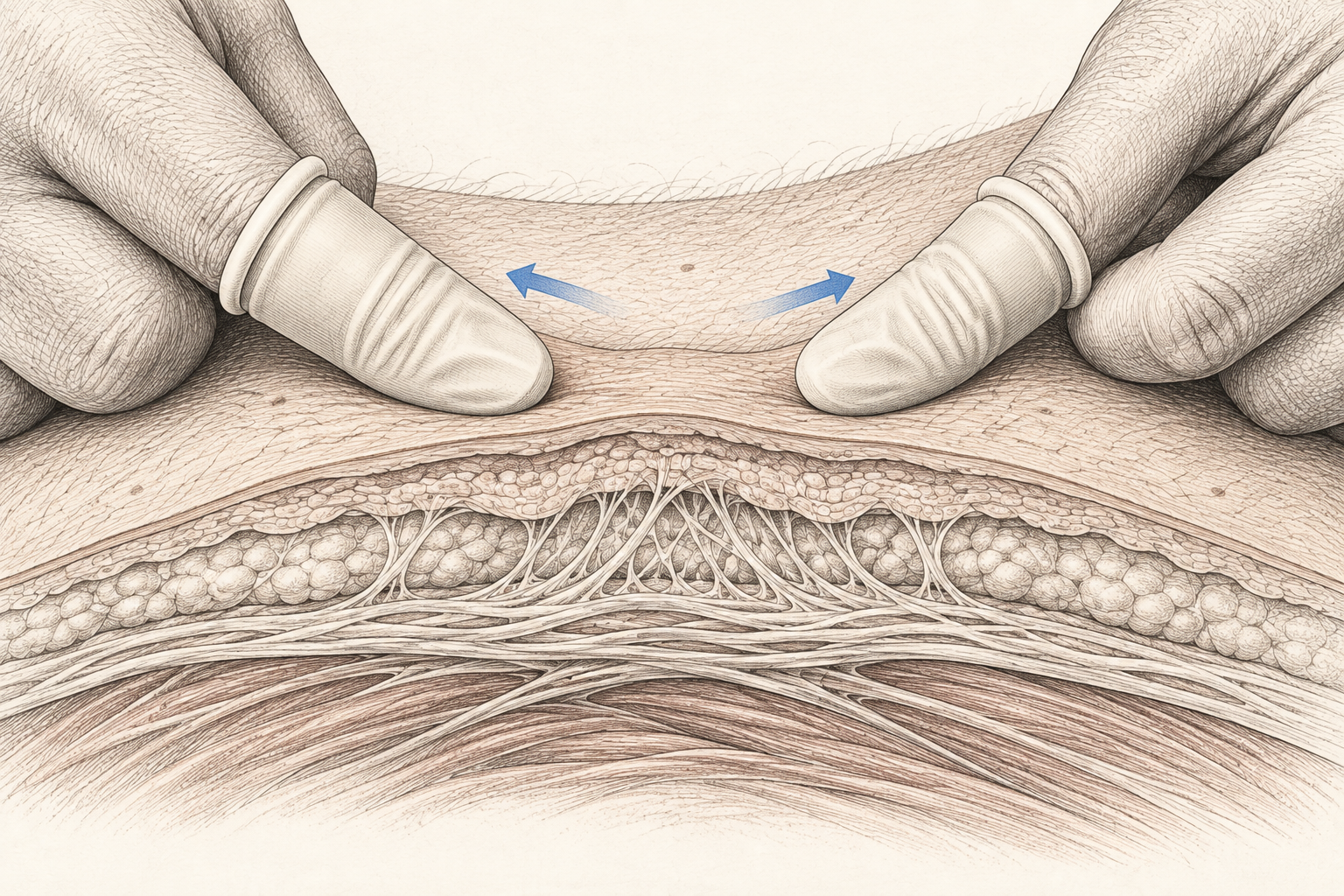
A small area of pulling can make a larger movement uncomfortable. With finger cots for a light grip, Chris gently tensions the skin and connected tissue in different directions.
Paired with FST: A supported turn can help you identify where a local pull interrupts the movement. Chris may use DFR® in that area, including around a fully healed scar when suitable, then return to the movement to check whether it feels easier.
In an ultrasound demonstration, Paul Mettler applied opposing skin tension over a relaxed hamstring and observed movement in deeper connective tissue. This gives a reason to consider the skin and nearby tissue when a golfer describes a local pulling sensation during a turn.
The study explored a mechanism rather than golf performance. Chris uses your movement check to decide whether local work is useful for you.
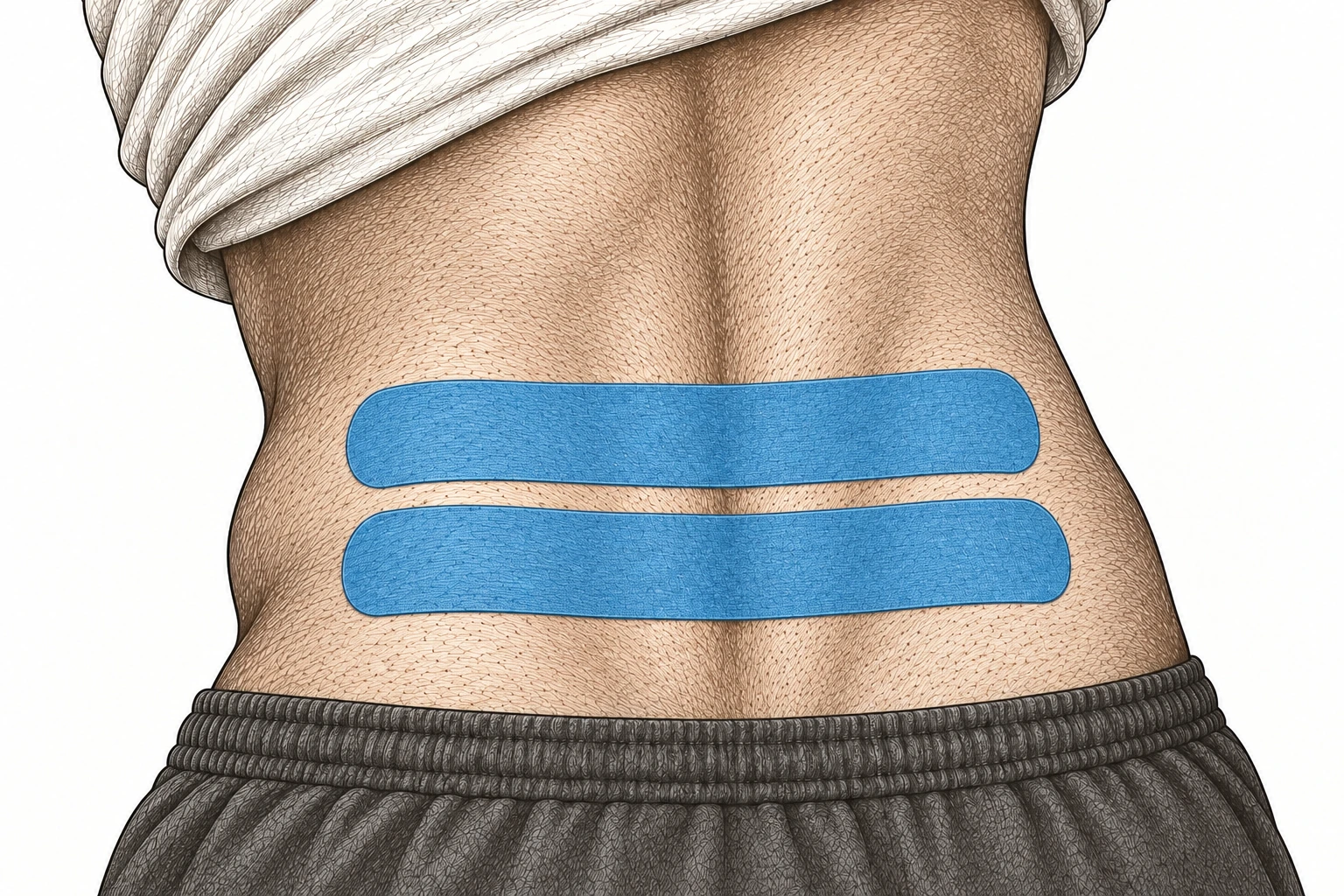
AN OPTIONAL ADDITION
After FST: Kinesiology tape may provide a light touch cue as you practise the movement explored in your session. For example, a lower-back application can give you feedback from the skin during a controlled turn. Chris checks your movement before and after application to see whether the tape adds anything useful.
If you choose kinesiology tape, Chris will check your skin and adhesive sensitivity, then explain wear time and removal.
FST training combines supported movement, assessment, and manual techniques. Pairing methods gives Chris options for positioning, focused contact, and checking your response. The examples above describe how care can be combined; research has not yet established an added benefit for these specific FST combinations.
Massage may offer short-term relief for some muscle discomfort. Responses to kinesiology tape vary, so Chris agrees on a specific purpose with you and reviews whether it helps.
Stretch to Win: FST training and integration
NCCIH: massage research · Royal Cornwall Hospitals: kinesiology tape guidance
05 / CARE THAT ADAPTS TO YOU
Your session should fit how you feel that day. Chris adjusts care around your movement, health history, and plans to play. He can change a technique or leave it out when it does not suit you.
Tell Chris if a position or pressure feels uncomfortable. He will adjust the support, change the angle, or use another approach so you can stay at ease.
If a joint already moves freely or feels unstable, Chris may choose supported movement rather than a deeper stretch. Previous injuries, surgery, and your clinician’s guidance help shape that choice.
If you feel sharp pain, tingling, numbness, dizziness, or increasing discomfort, tell Chris. He will stop the technique and discuss whether a change of approach or further assessment is needed.
Kinesiology tape will not be applied over damaged or irritated skin. DFR® and other skin-contact techniques are also adjusted to your skin’s condition. If kinesiology tape causes itching or irritation afterwards, remove it as instructed and contact Chris.
06 / WHEN TO GET MEDICAL ASSESSMENT
Some symptoms need medical assessment before hands-on treatment. Use this guide to decide when to seek help.
Get medical advice for pain that keeps returning, limits daily activity, or does not improve. New tingling or weakness, a recent injury, or pain that is getting worse also needs attention.
Seek prompt care for sudden severe back pain, pain that worsens quickly, or back pain with fever or feeling unwell.
If you are experiencing back pain with new bladder or bowel problems, loss of feeling around the groin, or weakness or numbness in both legs, you need emergency care. Call 911 or go to an emergency department.
Based on NHS back-pain assessment guidance; emergency contact adapted for the US. This is not a complete list of warning signs.
07 / WHAT TO EXPECT, COST & BOOKING
Your first visit includes time to discuss your goals, assess your movement, and begin hands-on care. Bring your playing schedule and any current medical guidance; wear comfortable athletic clothing.
Explain your symptoms, health history, and the golf movements that matter to you.
Chris recommends care for your goals and explains the options. He adjusts pressure, support, and range using your feedback.
Chris will review your movement with you and explain his recommendations for follow-up.
YOUR NEXT STEP
Choose your first visit.
You do not need to know whether you need FST, massage, or a combination. This first appointment gives Chris time to understand your needs and begin suitable hands-on care.
FIRST-VISIT PRICES
New clients: choose “FIRST TIME CLIENT” in MassageBook.
First visits must be paid in full in advance.
Choose the amount of time that feels right for you. Both visits include a conversation, movement review, and hands-on care. The 90-minute option gives you another 30 minutes together.
The first 15–20 minutes are for your history, goals, and movement review. Hands-on care follows within your appointment time.
Your time is one-to-one with Chris in his private studio. The support, pace, and pressure follow your needs.
Optional kinesiology taping adds $20 to a first visit. DFR® is not usually needed at the first visit.
Returning client? Book your next sessionTell Chris when you plan to play. Discuss timing and intensity before booking.
Bodywork does not replace swing coaching or medical care.