Hold your riding position
Your trunk and shoulders help you stay supported as you reach the bars and look ahead. Tell Chris how long you ride before neck or back discomfort begins.
 RECOVERYChoose your first visit
CYCLING · AUSTIN, TX
Assisted stretch therapy for hips, back, and shoulders after time in the saddle. Chris supports and guides movement around the positions that matter to your riding.
Choose your first visitOne-to-one with Chris · First visit: 60 minutes $165 / 90 minutes $235
Before you visit: symptoms that need medical care ↓
01 / DEMANDS
A short commute, a long road ride, and an indoor session place different demands on your body. Bring the details of your riding position and weekly time on the bike.
Your trunk and shoulders help you stay supported as you reach the bars and look ahead. Tell Chris how long you ride before neck or back discomfort begins.
The hips and knees bend and straighten through each turn. Hills, gearing, and a recent increase in riding can change how that effort feels.
Saddle and hand contact, road vibration, and limited position changes can become uncomfortable on longer rides. A bike-fit review may belong alongside care.
02 / CONCERNS
Where it happens, when it starts, and what changes it will help Chris understand your concern.
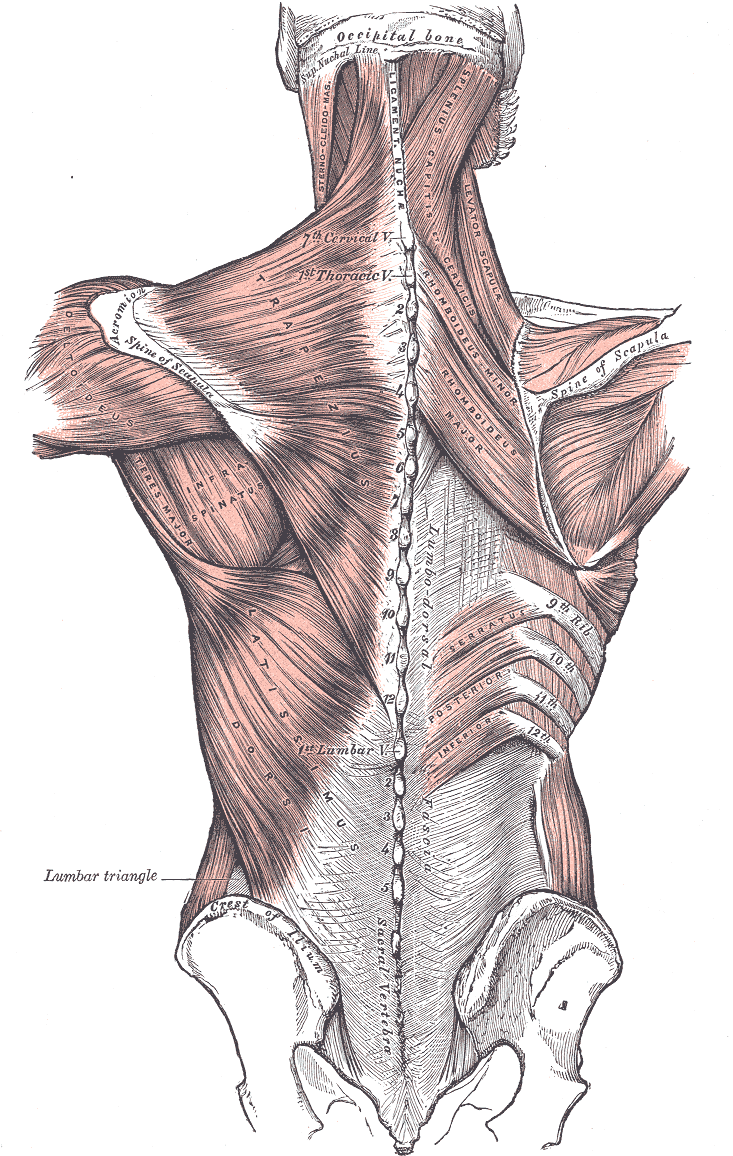
Notice whether discomfort starts in a low riding position, on climbs, or after a set amount of time. Back muscles support your trunk while you reach forward. Persistent numbness or weakness needs assessment, not more pressure.
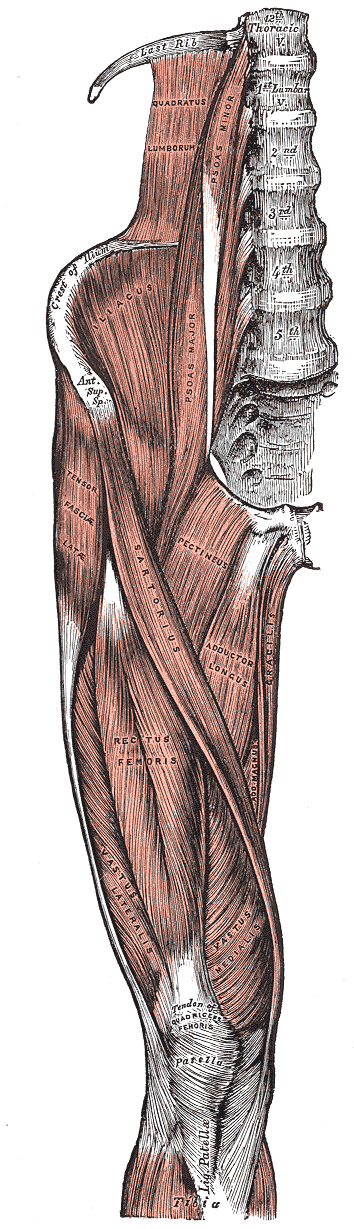
Tell Chris whether it feels like stiffness, a pinch, or pain as the knee comes up. Muscles at the front of the hip help lift the thigh. Share any recent change in saddle height, bars, or riding volume.
03 / FST
Fascial Stretch Therapy (FST) combines supported movement, compression, and stretching. Chris selects the position, angle, and range using your history and feedback.
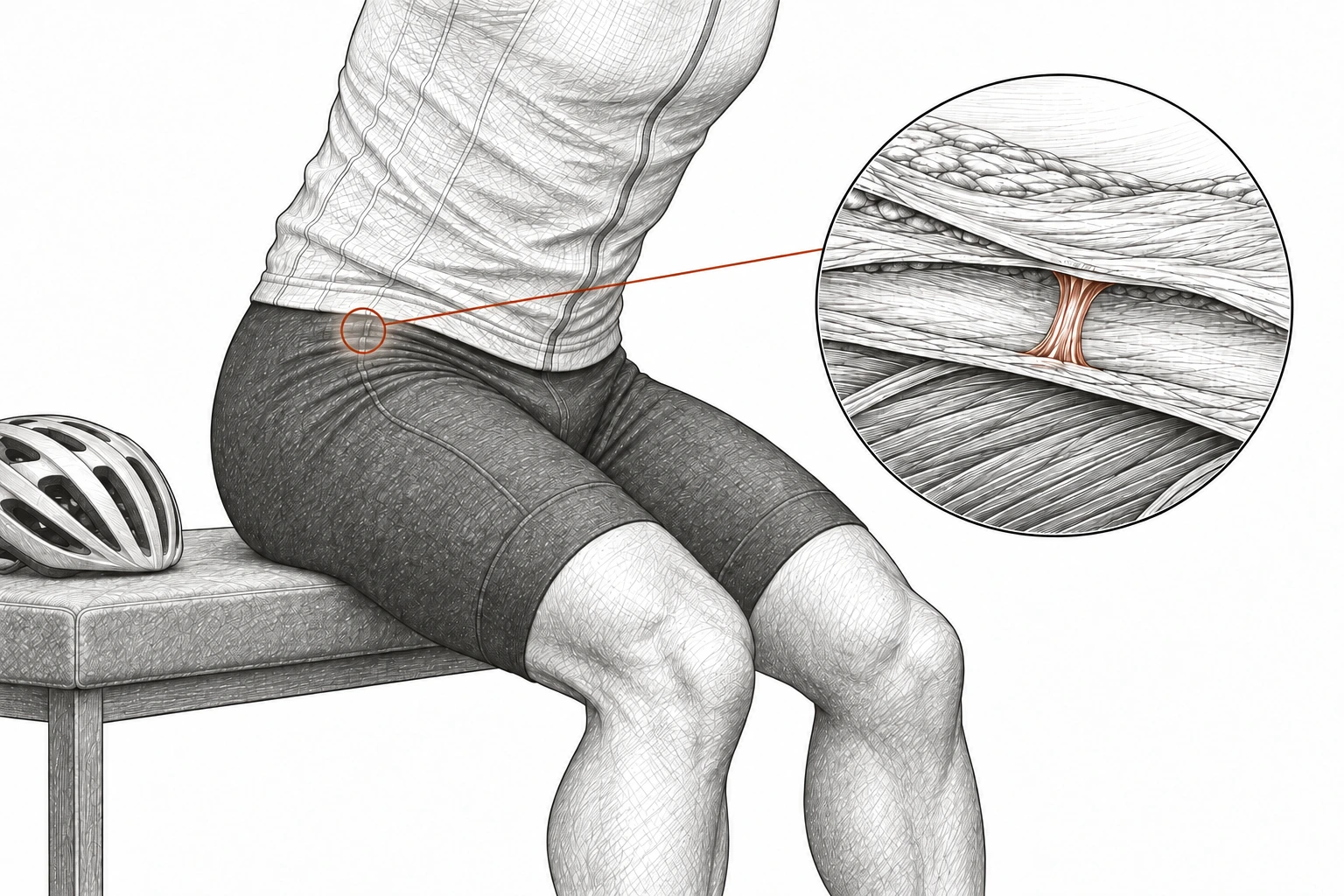
01 / IDENTIFY THE MOVEMENT
Sit securely with both feet on the floor and show Chris a small forward hinge at the hips. Keep your arms relaxed. Agree on a position you can repeat; you do not need to recreate a low racing posture.
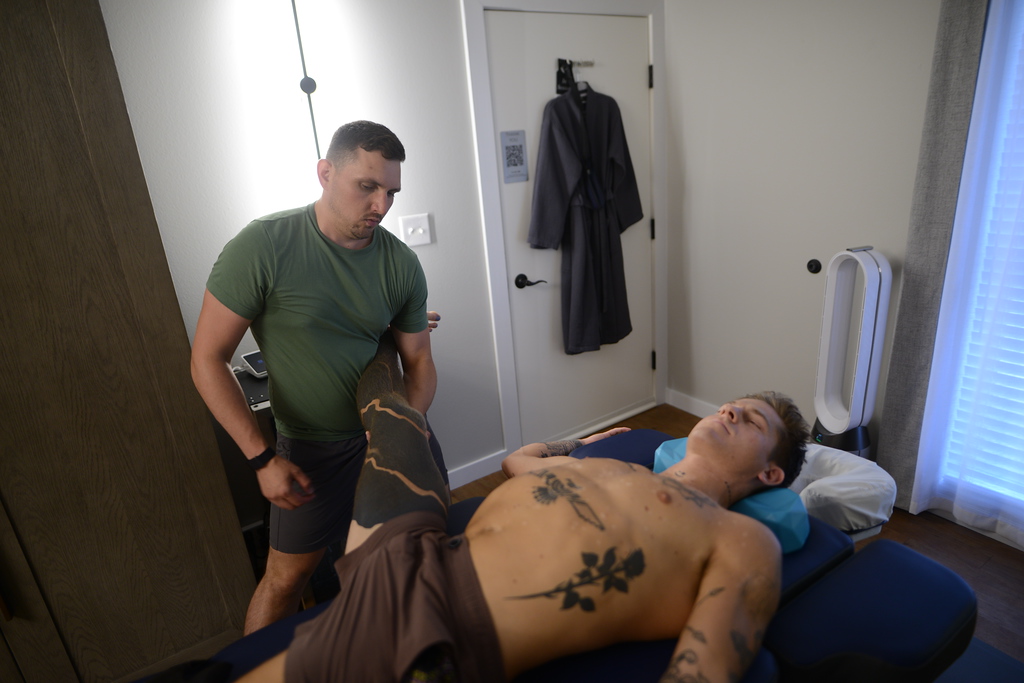
02 / CHRIS GUIDES THE MOVEMENT
On the table, Chris can explore hip movement and a supported trunk position. Tell him how it feels as he changes the angle and pace. He can reduce the movement or stop at any point.
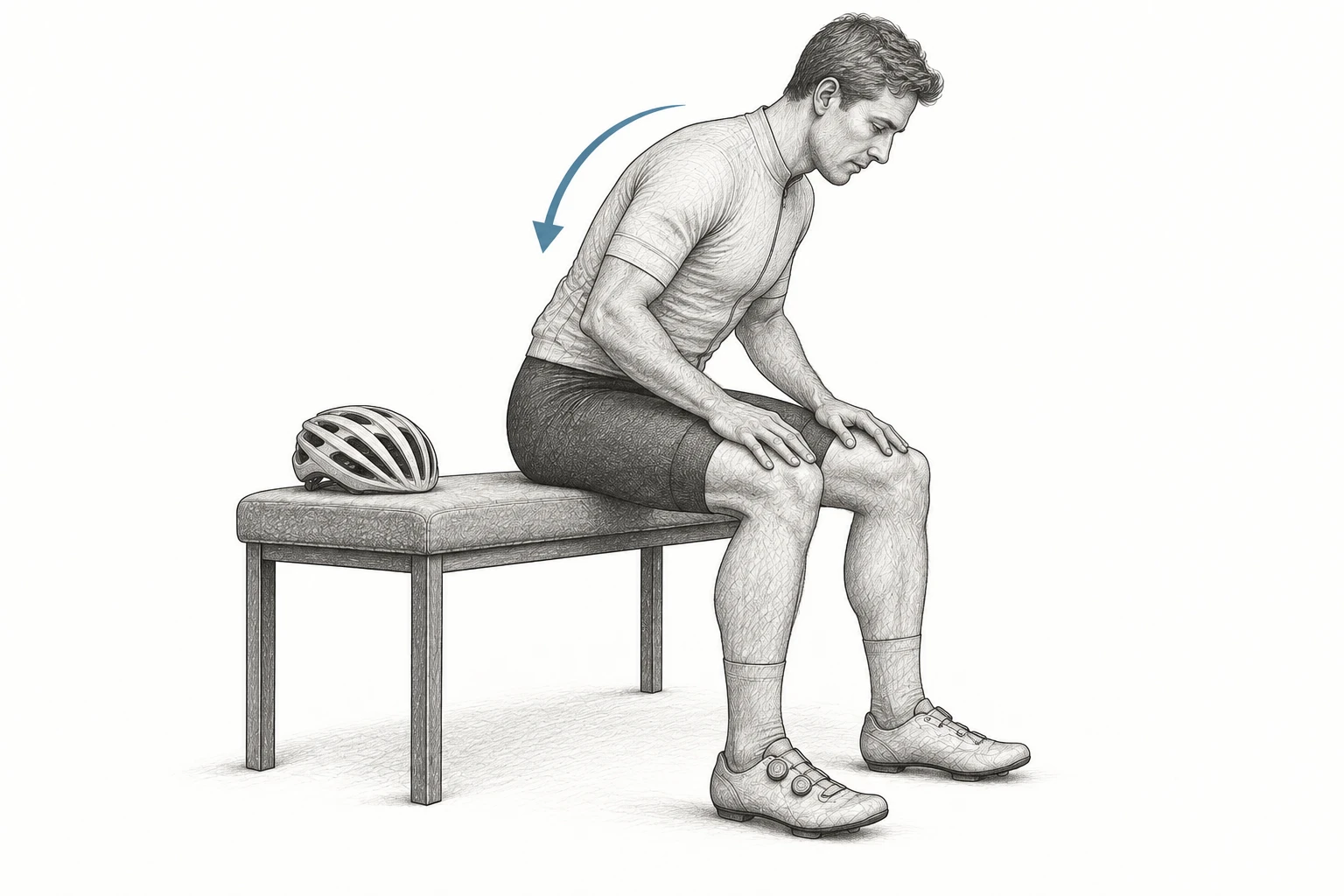
03 / REVIEW WITH CHRIS
Chris will ask you to repeat a small seated hip hinge. Describe what changed and what still needs attention. The comparison helps guide the next part of the session.
The illustrated movement is an example. Chris chooses the task and treatment area with you.
04 / OTHER TREATMENTS
Chris can select methods around your hips, thighs, or back. You do not need to choose a treatment technique before the visit.
Supporting methods are included when selected for FLEX. Optional first-visit tape is $20. Chris explains any charge for another appointment type before you agree to it.
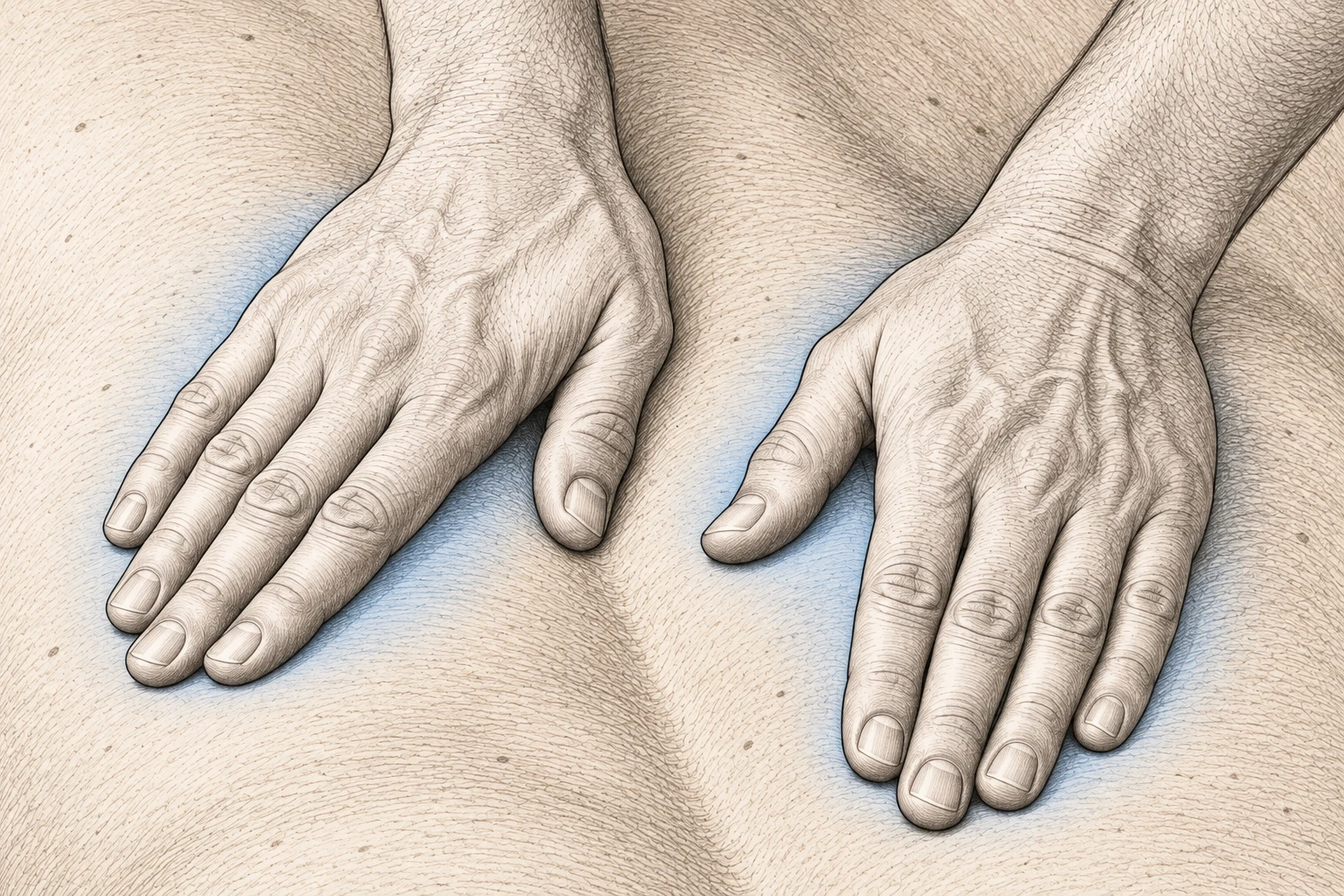
With the area supported, Chris can vary the position and focus massage on your hips, thighs, or back. Pressure follows your feedback. Massage and FST can share a FLEX session.
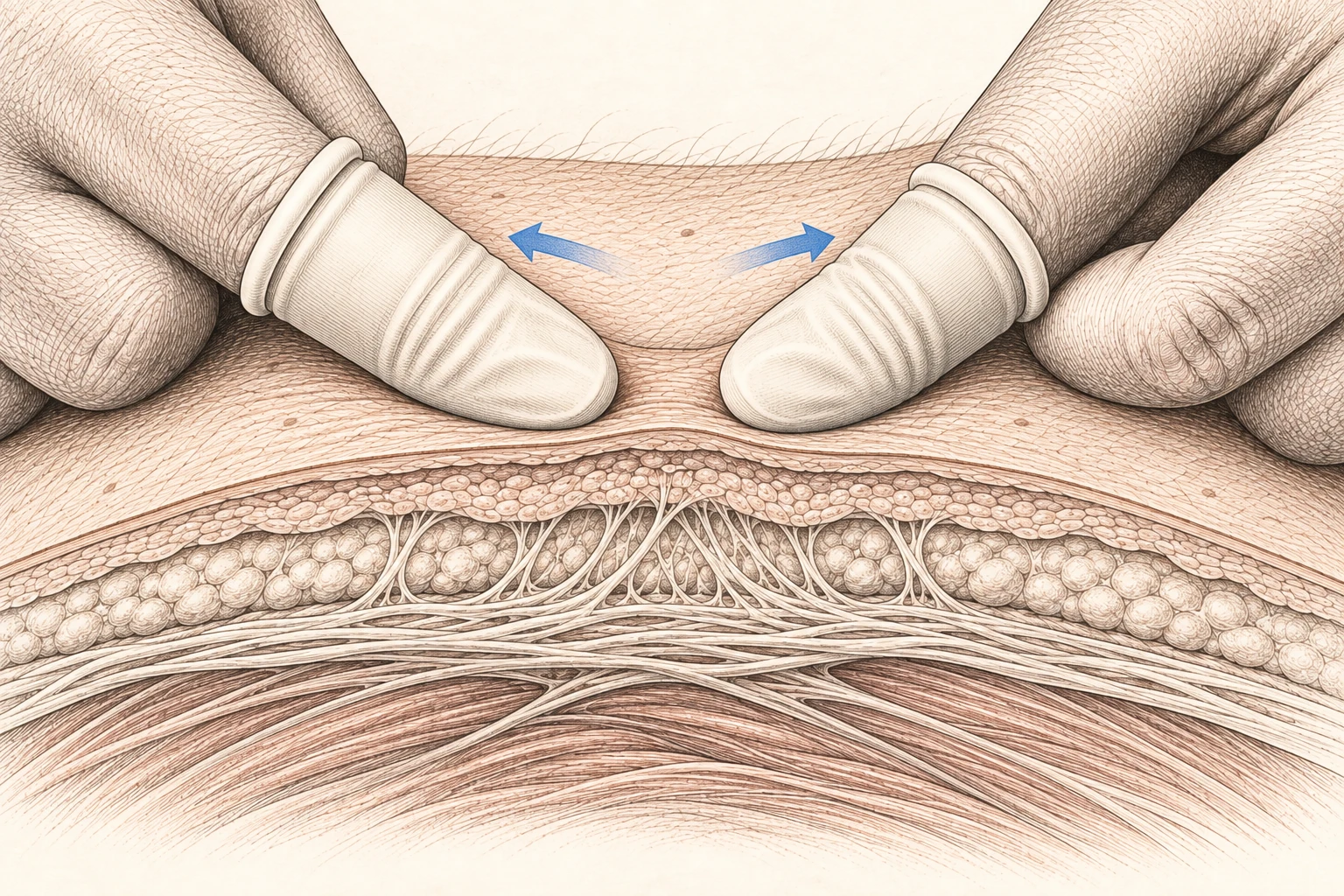
If a local pulling sensation affects a small seated hip hinge, Chris may try focused skin contact with the area supported. He then asks you to repeat the movement and describe the response.
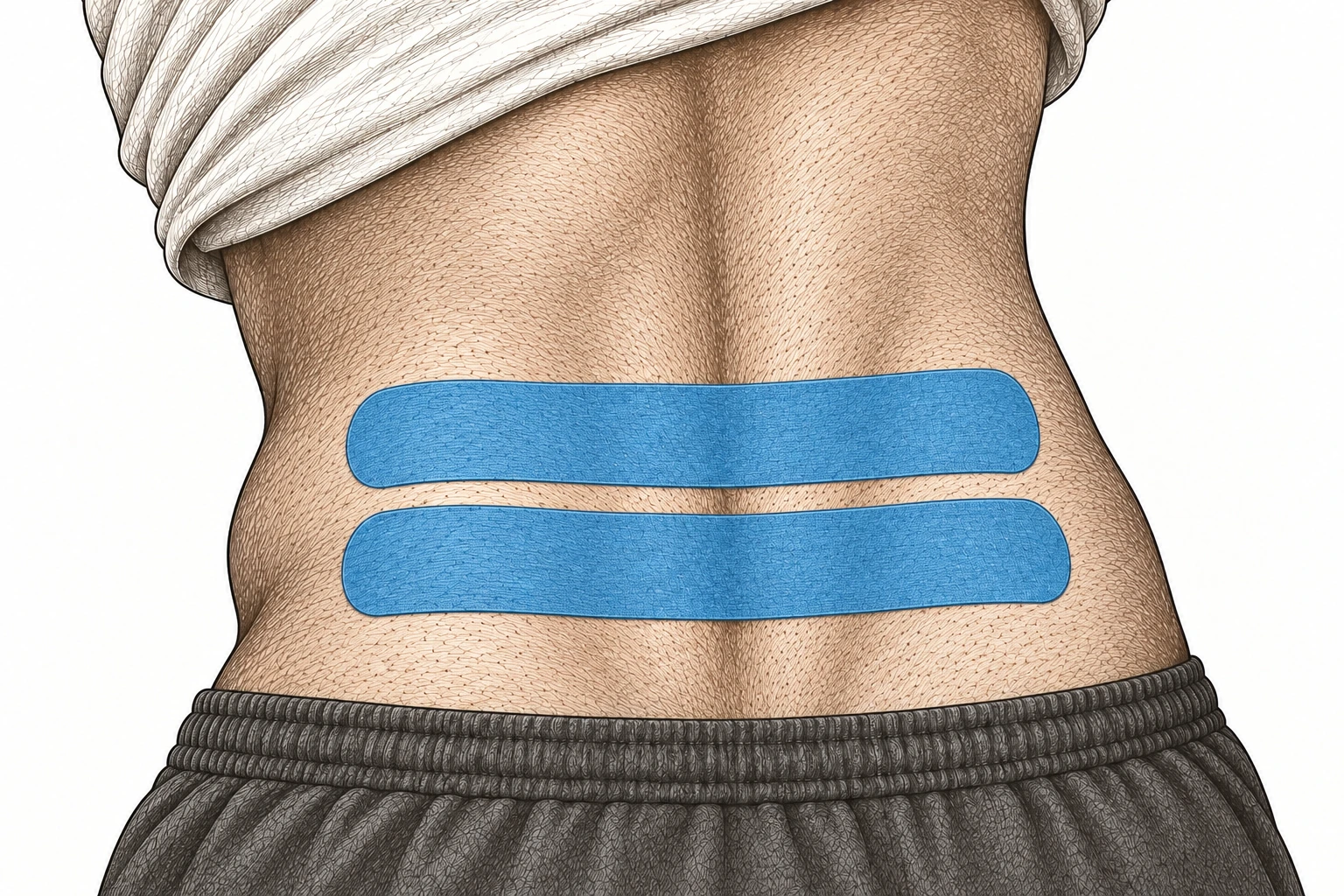
AN OPTIONAL ADDITION
Kinesiology tape may be tried as a skin-contact cue during the movement you explored. Chris checks skin and adhesive sensitivity, explains removal, and compares the movement with you. It is optional.
05 / ADJUSTING CARE
Your feedback can change the session at any time.
Bring details of your next long ride, recent mileage changes, and any bike-fit adjustments. Chris can change table support, pressure, and range if your neck or back is uncomfortable.
Tell Chris about saddle irritation, road rash, or adhesive sensitivity. Skin-contact methods can be left out while the area recovers. Kinesiology tape will not be applied over damaged or irritated skin.
Tell Chris about sharp pain, tingling, numbness, dizziness, or increasing discomfort. He can stop, change the method, or recommend medical assessment. Share any treatment restrictions before you start.
06 / ASSESSMENT
A crash, persistent numbness, or increasing pain needs a different plan from routine movement care.
Arrange medical advice for repeated pain, hand or saddle-area numbness, or weakness. A qualified bike fitter can review your position, but cannot replace medical assessment of these symptoms.
Stop riding and get prompt medical assessment after a crash if you have head or neck symptoms, severe swelling, or cannot use a limb normally. Do not ride through a suspected concussion.
If you are experiencing a worsening headache, repeated vomiting, seizure, new weakness, or difficulty staying awake after a crash, you need emergency care. Call 911.
CDC: concussion danger signs · CDC: heat illness and emergency action · AOSSM: cycling concerns and bike fit
07 / YOUR FIRST VISIT
Appointment time includes intake and hands-on care. You do not need to choose a method before your first visit.
Discuss your activity, health history, and the movement you want to make more comfortably.
Chris explains the intended approach and adjusts care with your feedback.
Try the same movement again. Discuss what feels different and agree on the next step.
This visit focuses on supported stretching and muscle comfort. A bike fitter can review the bike setup. Tell Chris about any fit changes so he understands the position you use.
Describe ride length, terrain, time in your usual position, and when discomfort starts. Include recent mileage and equipment changes.
YOUR NEXT STEP
Choose the time that feels right.
Both durations include time to discuss your goals and begin care. Choose your first visit below.
FIRST-VISIT PRICES
New clients: choose “FIRST TIME CLIENT” in MassageBook.
First visits must be paid in full in advance.
Choose the amount of time that feels right for you. Both visits include a conversation, movement review, and hands-on care. The 90-minute option gives you another 30 minutes together.
The first 15–20 minutes are for your history, goals, and movement review. Hands-on care follows within your appointment time.
Your time is one-to-one with Chris in his private studio. The support, pace, and pressure follow your needs.
Optional kinesiology taping adds $20 to a first visit. DFR® is not usually needed at the first visit.
Returning client? Book your next session4111 Marathon Blvd, Suite 110
Austin, TX 78756
Tell Chris about practice, competition, and any medical restrictions.
Reviewed by Chris Corona · Review confirmed