
SURGICAL PRE-OP & POST-OP · AUSTIN, TX

Support your recovery.
Move with care.

Plan supported movement and care for muscle comfort around your recovery. Tell Chris about the procedure, healing, and your clinician’s restrictions so the visit can fit alongside rehabilitation.

Choose your first visit ↗
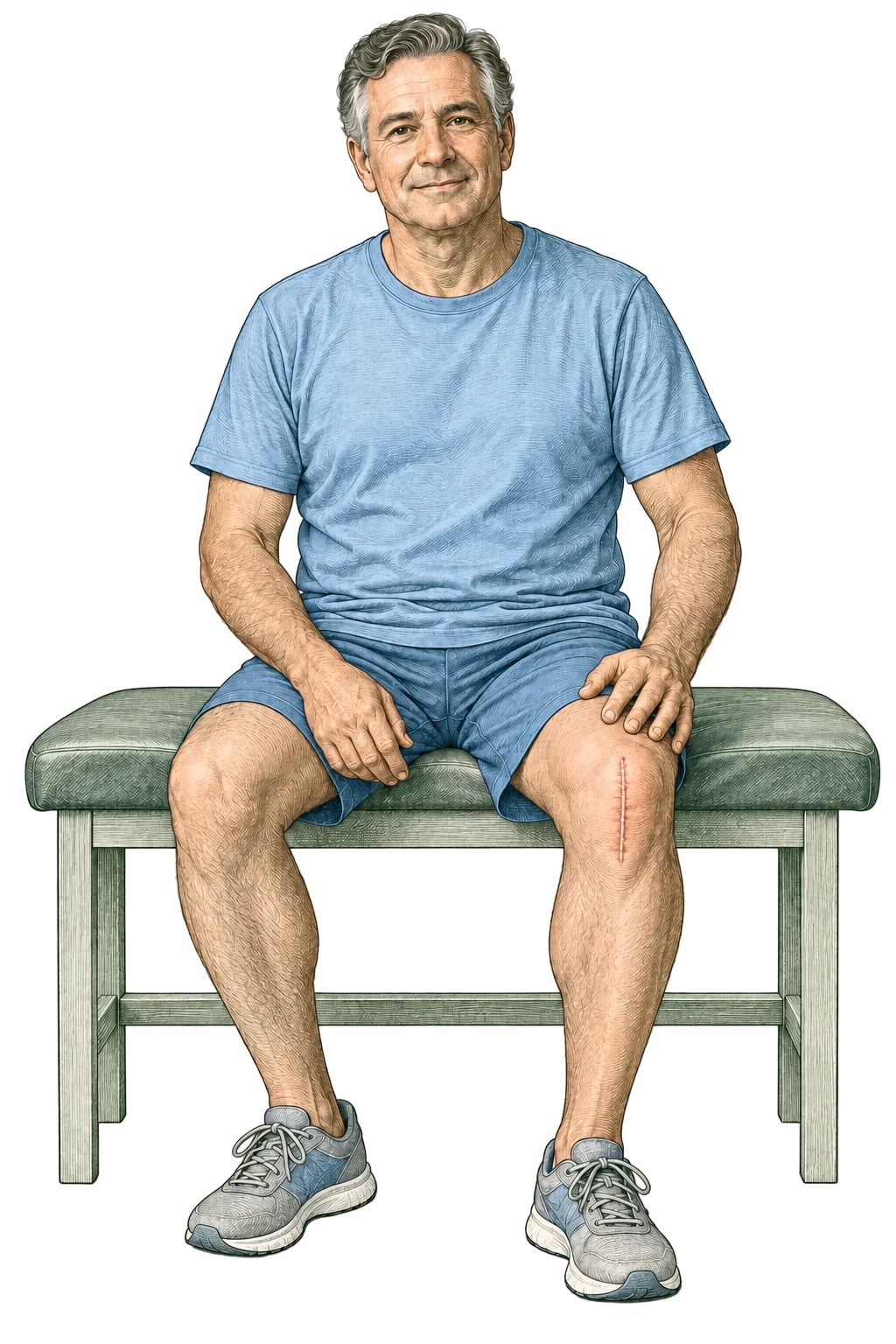
An adult seated on a treatment bench with a healed scar at one knee.
Care that follows your stage of healing.

01 / HEALED SCARS · TISSUE MOVEMENT

Help the tissue move more comfortably.

A healed scar can feel tight or sensitive as the surrounding area moves. When your surgical team has cleared local work, gentle scar mobilization and soft-tissue care may help with comfort and flexibility.

A careful approach to local tissue

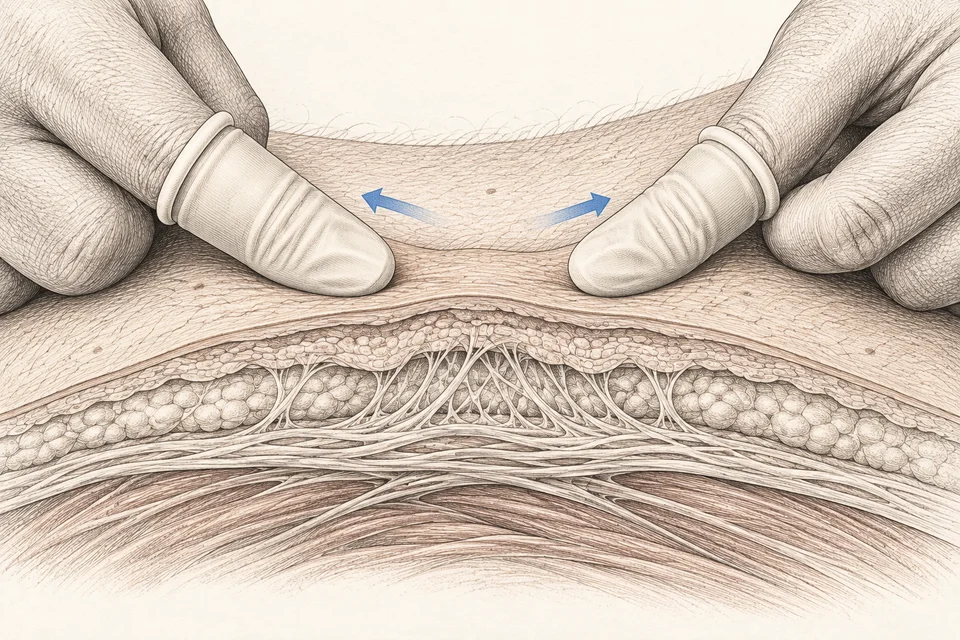
Concept cutaway of gentle opposing skin contact and connected tissue layers.

DFR and scar mobilization

Dermal-Fascial Restoration uses controlled tension at the skin to move connected tissue. Chris may consider it around a fully healed surgical scar to explore easier tissue movement and less pulling. The amount of contact follows your healing, medical guidance, and comfort.

Release tension around the joint

Gentle massage and supported movement may ease tension in nearby muscles. The aim is movement that fits your current recovery limits, without forcing the joint or stretching the repair.

Support physical therapy

Physical therapy guides the exercises that build strength, joint control, and stability. Hands-on care can support comfort alongside that work. Share your exercise plan so the two approaches fit together.

Respect swelling and inflammation

Follow your surgical team’s plan to manage swelling. Chris adjusts or postpones local care when an area is inflamed and can focus on other comfortable areas.

Scar work starts only after the wound has fully healed and your surgical team has cleared it. A closed skin surface alone does not mean the deeper repair is ready.

What does the research show?

Clinical scar-care guidance supports massage after a wound has fully healed to help scar flexibility and sensitivity. Readiness also depends on the deeper repair and the surgical team's advice.

A DFR ultrasound report observed tissue movement during skin tension. It does not establish that DFR breaks up surgical scar tissue, removes deep adhesions, or reduces post-surgery inflammation. Benefits specific to surgical recovery remain uncertain.

Royal National Orthopaedic Hospital: scar care after surgery · DFR: skin-tension ultrasound report

02 / YOUR SURGEON · YOUR THERAPIST · YOUR GOALS

Bring your recovery plan with you.

Tell Chris what you want to return to, whether that is dressing, walking, reaching, or your usual exercise. Start with what your care team has cleared you to do.

Before your appointment

Share the procedure, date, wound status, hardware location, and written restrictions. Mention blood thinners, altered sensation, and any complications. Before an operation, check whether your surgeon wants you to pause bodywork.

During your session

Use supports and positions that protect the area. Chris can focus on other tense areas while a repair heals. Report sharp pain, pulling at the incision, or new tingling so care can stop or change.

When medical care comes first

Contact your surgical team promptly for fever, wound drainage, spreading redness, or new one-sided leg swelling or calf pain. Do not massage the area. Call 911 for chest pain or sudden shortness of breath.

Read more: AAOS: warning signs during recovery

YOUR NEXT STEP

Start with what
matters to you.

You do not need to select a technique before booking. The first visit gives you and Chris time to discuss your goals and begin suitable care.

How soon after surgery can I book?

There is no single waiting period for every operation. Ask your surgical team when hands-on care is suitable and which areas, movements, and pressures are allowed. Share those instructions with Chris before treatment.

Can I have care before surgery?

Discuss the planned procedure and date with Chris and your surgeon. Suitable care can focus on comfort and muscle tension while you follow any prescribed preparation exercises.

How does this fit with physical therapy?

Your physical therapist guides strength, stability, and return to activity. Chris can provide soft-tissue care for comfort and movement alongside that plan, within your prescribed restrictions.

What is the first step after surgery?

Before booking, tell Chris the procedure and date, the area you want help with, and your surgeon’s or physical therapist’s current restrictions. Local scar work needs appropriate healing and clearance for the specific contact.

FIRST-VISIT PRICES

New clients: choose “FIRST TIME CLIENT” in MassageBook.

First visits must be paid in full in advance.

Choose the amount of time that feels right for you. Both visits include a conversation, movement review, and hands-on care. The 90-minute option gives you another 30 minutes together.

The first 15–20 minutes are for your history, goals, and movement review. Hands-on care follows within your appointment time.

Your time is one-to-one with Chris in his private studio. The support, pace, and pressure follow your needs.

Optional kinesiology taping adds $20 to a first visit. DFR® is not usually needed at the first visit.

Returning client? Book your next session

OPTIONAL READING

Understand the background.

Different procedures. Different needs.

OPTIONAL READING

Different procedures. Different needs.

Before surgery, care can focus on comfort and tension around an affected area. After surgery, the repair needs protection. Your surgeon and physical therapist set the limits for movement, pressure, and loading.

Shoulder tendon reattachment

A repaired rotator cuff or other reattached tendon needs time to heal to bone. Chris works within your prescribed range and sling instructions. Strong stretching or traction may be unsuitable while the repair heals.

Metal rods, plates, or screws

After surgery to stabilize a leg fracture, tell Chris where the hardware is and how much weight you may put on the leg. Care around the area must respect bone healing and sensitive tissue.

Knee or hip replacement

The goal is useful, comfortable movement around the joint as recovery allows. Share any position or movement restrictions. Chris adapts support and contact to your current rehabilitation plan.

Read more: AAOS: rotator cuff repair and rehabilitation · AAOS: shinbone fractures and surgical rods · AAOS: activity after hip replacement

Reviewed by Chris Corona · Review confirmed