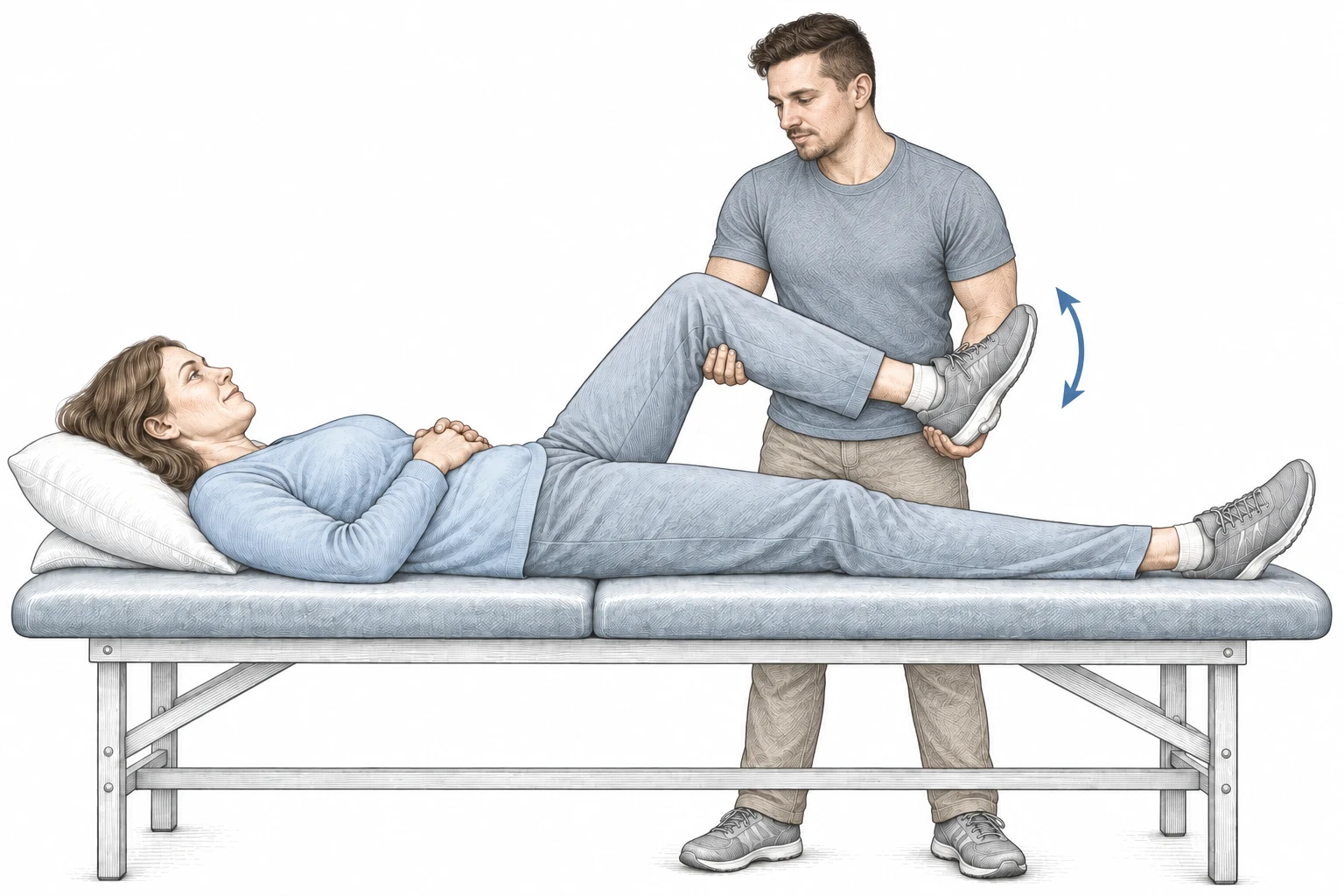
Support the limb and move slowly
Chris supports the weight of your limb and guides a small, comfortable movement. Slow changes of angle let him adjust to resistance and your feedback. He can pause or reduce the range if a spasm starts.
 RECOVERYChoose your first visit
 MULTIPLE SCLEROSIS · AUSTIN, TX
Turning in a chair, reaching to dress, or changing position can become harder when muscles feel stiff. Chris offers supported stretch therapy and massage around the daily movements that matter to you, with room for rest.
Choose your first visit ↗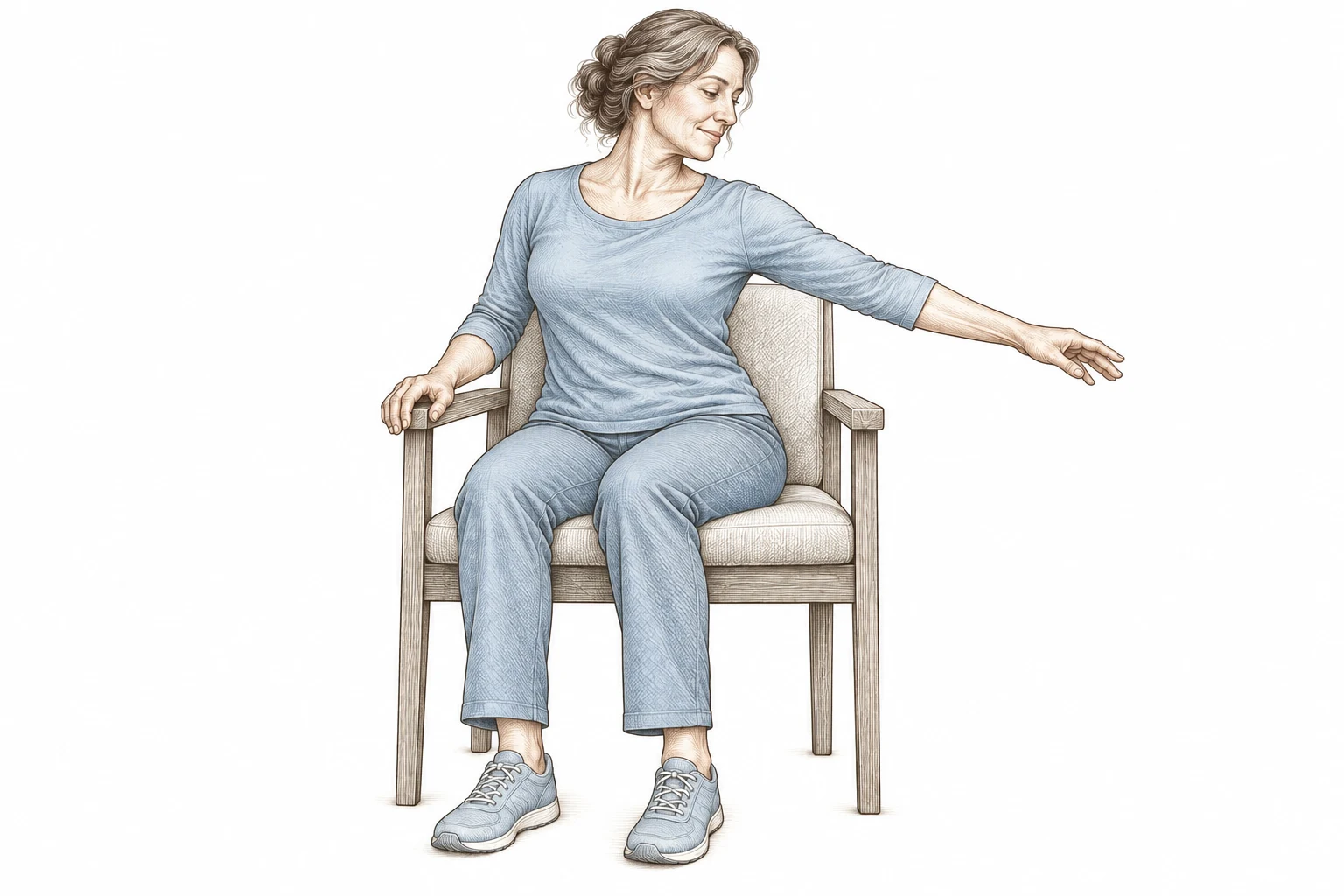
Before you visit: health and comfort guidance ↓
01 / GENTLE SUPPORT, USEFUL MOVEMENT
Fascia Stretch Therapy (FST) uses assisted movement to work with muscles and connective tissue around joints. Chris aims to ease the feeling of tightness and make movement more comfortable, alongside your MS care.
Chris supports the weight of your limb and guides a small, comfortable movement. Slow changes of angle let him adjust to resistance and your feedback. He can pause or reduce the range if a spasm starts.
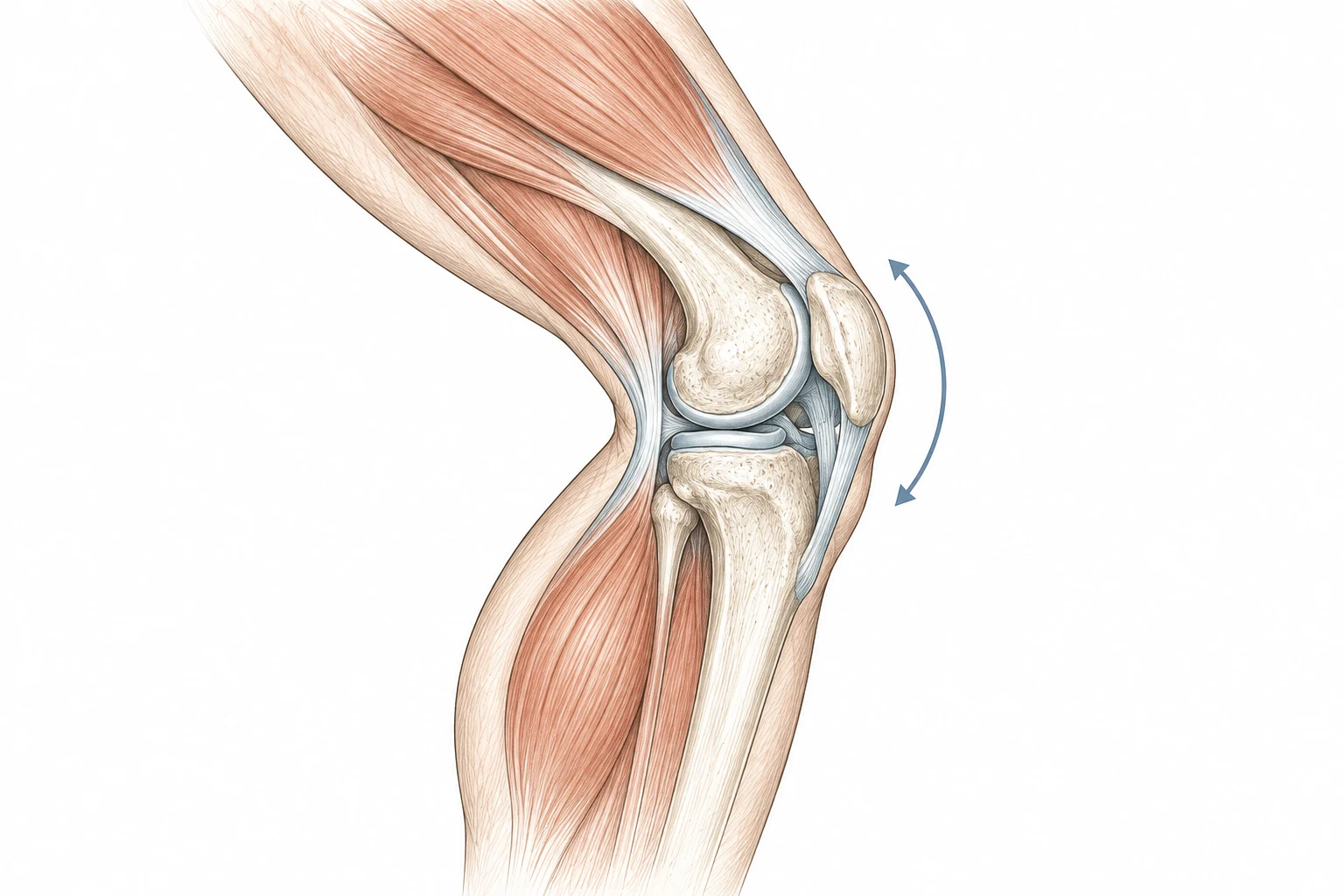
Chris works with muscle and connective tissue around the joint, using a comfortable range. The small arc shows the idea of gentle movement, not a target angle. He adjusts the stretch or gentle traction to your response and does not force a resistant joint.
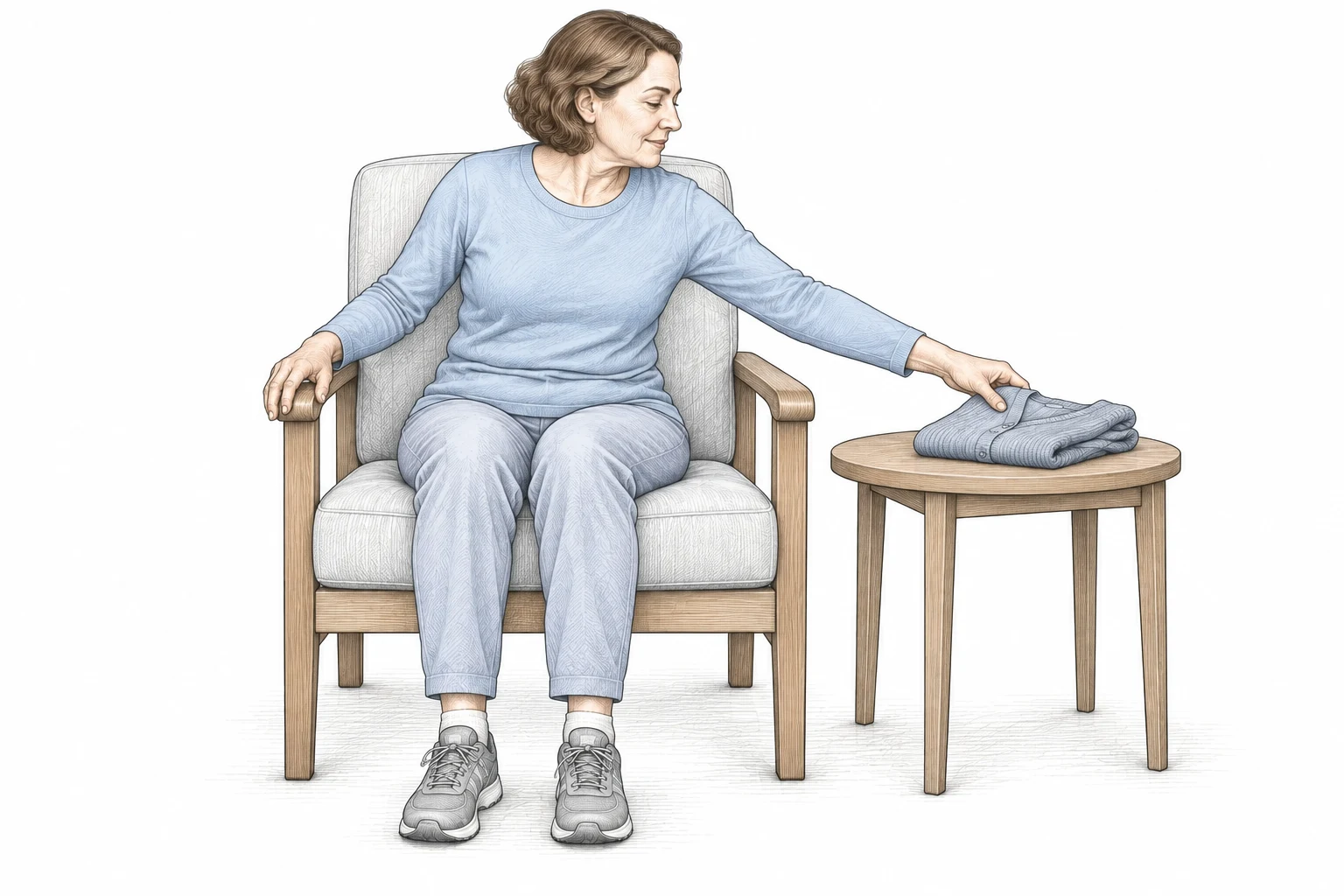
Choose a goal such as turning in a chair, reaching to dress, or placing your foot more comfortably. Review whether that task feels easier after the session and how you feel later that day.
Some people use increased muscle tone to help them stand or transfer. Tell Chris and your MS team if this applies to you, so comfort goals also protect useful function.
Hands-on care can support comfort and movement. It does not treat MS nerve damage or replace your medical and rehabilitation care.
In a trial of 231 people with MS who could walk, education plus stretching and education plus range-of-motion exercise produced similar improvements in reported spasticity impact. Stretching was not better than the comparison program.
A smaller study of myofascial stretching in MS reported some immediate mobility benefits. It did not establish a general improvement in spasticity or balance. Neither study tested the branded FST method.
Stretching research outside MS suggests that changes in stretch tolerance and tissue stiffness can contribute to range of motion. These are possible explanations for easier movement, not proof that FST changes MS muscle tone or produces lasting tissue lengthening.
Direct evidence for FST in MS remains limited. Relief of local muscle discomfort is a reasonable care goal, but research does not establish that FST releases pressure from nerves to reduce MS spasms. MS-related nerve damage and a locally compressed nerve need different assessment.
MS stretching and movement trial (2024) · MS myofascial stretching trial (2024) · Stretching and tissue stiffness study (2024) · Stretch to Win: the FST method · NICE: MS care and spasticity
02 / MAKE ROOM FOR YOUR NEEDS
The treatment room and restroom are wheelchair accessible, with a route without steps from parking. The hydraulic table adjusts in height, and a support person is welcome. Describe the positions you find comfortable and the movements you want to make easier.
Contact your MS care team about new or worsening neurological symptoms or a sudden increase in spasms. Infection, bladder or bowel problems, and skin irritation can increase spasticity and may need medical care.
Chris can help with some transfers onto the table. Call before booking to discuss the help or equipment you need and the support he can provide. Share fatigue, temperature sensitivity, changes in sensation, and areas of fragile or sore skin.
Use supported positions and pauses. Report pain, tingling, numbness, or increased spasms. Chris can change pressure, reduce movement, or stop. A joint that resists movement is not forced.
Allow time to change position and check how steady you feel. Keep everyday movement within the plan agreed with your rehabilitation team. Note changes in comfort, useful movement, spasms, and fatigue.
Read more: MS Trust: spasm triggers · NICE: MS care and spasticity
YOUR NEXT STEP
You do not need to select a technique before booking. The first visit gives you and Chris time to discuss your goals and begin suitable care.
Chris can work with muscle discomfort and restricted movement, and track whether you feel more comfortable. A reduction in MS spasms is not a proven FST outcome. Keep your MS team involved in spasticity care.
The clinic and restroom are wheelchair accessible, and the hydraulic table adjusts in height. A support person is welcome. Chris can help with some transfers. Call before booking to discuss transfer help and the positions you need.
A joint can feel stuck for several reasons. Chris can explore comfortable movement, but a fixed contracture needs specialist assessment. The session does not force the joint or promise to reverse a contracture.
No. Explain your goals and concerns to Chris. He will discuss suitable options and your preferences before care begins.
Yes. Describe the task you want to make more comfortable and any support you use. Chris can use that goal to guide the session within your available range and medical restrictions.
FIRST-VISIT PRICES
New clients: choose “FIRST TIME CLIENT” in MassageBook.
First visits must be paid in full in advance.
Choose the amount of time that feels right for you. Both visits include a conversation, movement review, and hands-on care. The 90-minute option gives you another 30 minutes together.
The first 15–20 minutes are for your history, goals, and movement review. Hands-on care follows within your appointment time.
Your time is one-to-one with Chris in his private studio. The support, pace, and pressure follow your needs.
Optional kinesiology taping adds $20 to a first visit. DFR® is not usually needed at the first visit.
Returning client? Book your next sessionOPTIONAL READING
OPTIONAL READING
MS can affect the signals that control muscle activity. Time in one position can add another kind of stiffness. Both matter when a limb feels heavy, tight, or difficult to move.
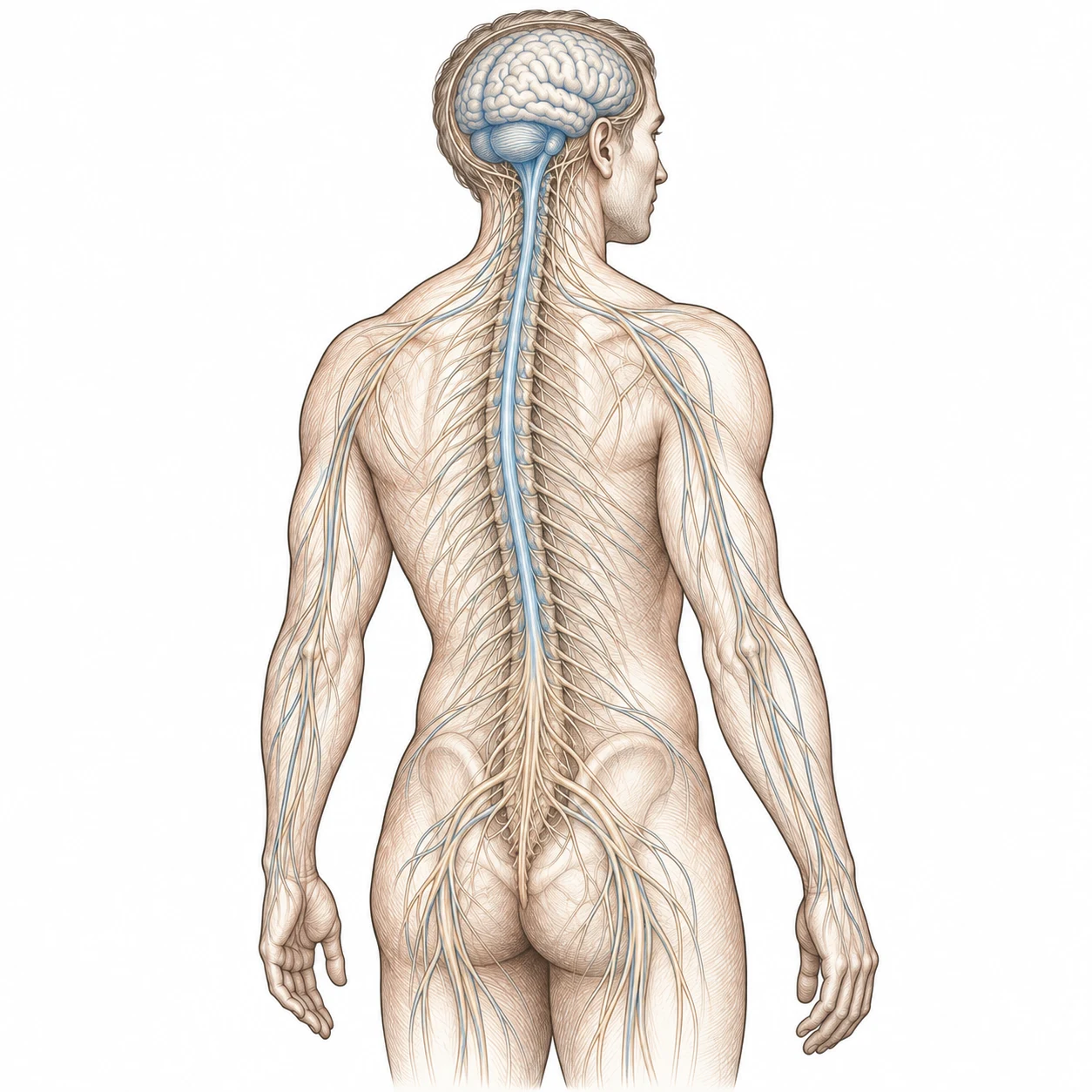
Damage in the brain and spinal cord can disrupt the control of muscle tone. Spasticity is increased stiffness or resistance to movement; spasms are sudden, involuntary muscle contractions.
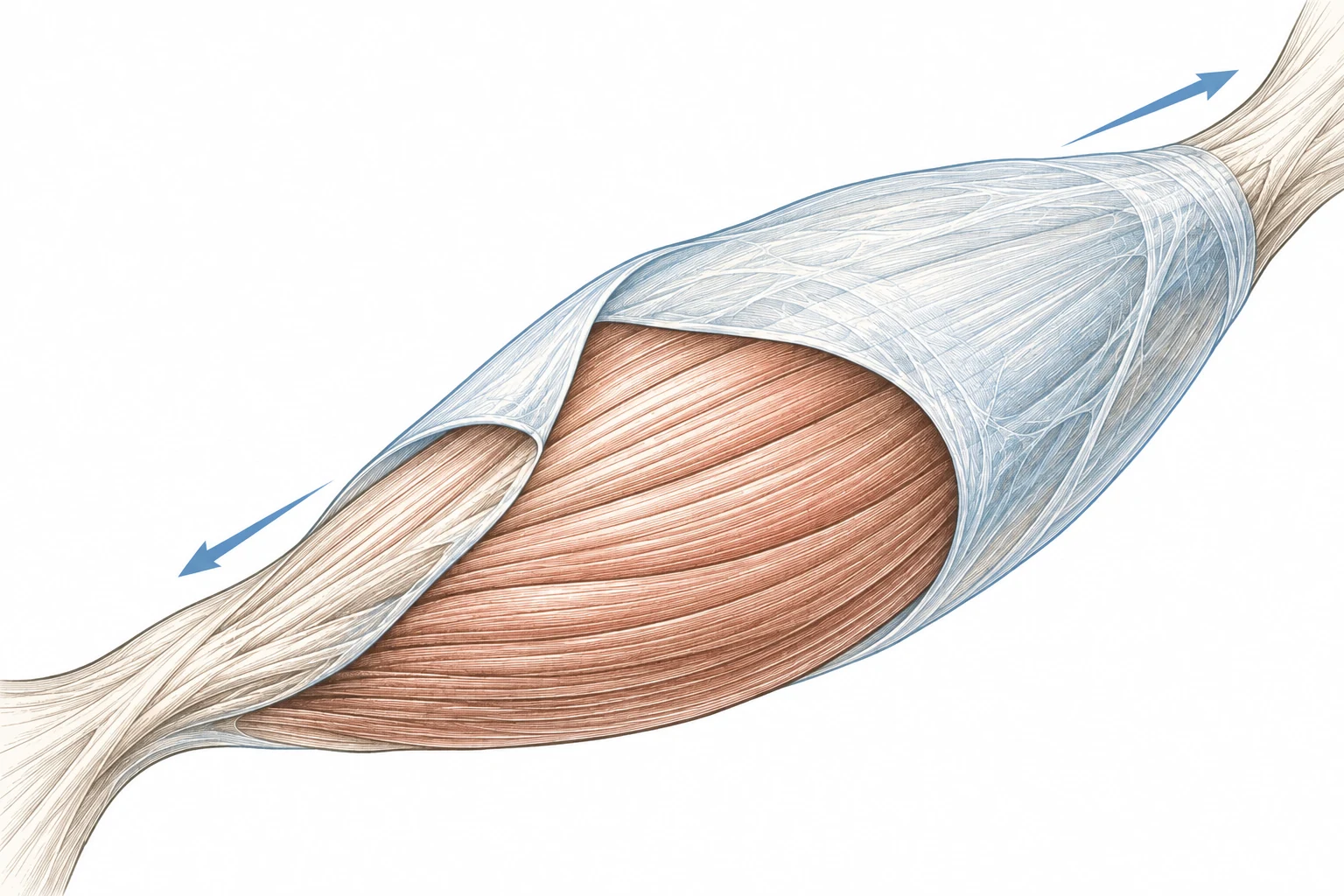
Muscles and connective tissue can become less flexible when movement is limited. Long periods in one position can add discomfort and reduce available joint movement.
The illustrations show structures involved in movement. They do not show a treatment result.
A limb held in a bent or straight position may reflect muscle tone, pain, or shortened tissue. A fixed loss of movement can be a contracture and needs assessment by your rehabilitation team. Chris works within the available range.
Fatigue, weakness, or balance changes can make activity harder. The goal may be easier seated movement, dressing, or changing position. Walking can be a goal when it is appropriate for you.
Read more: NIH: how MS affects the nervous system · MS Trust: stiffness, spasms, and contractures
Reviewed by Chris Corona · Review confirmed